
Tooth loss not only affects the ability to chew but also reduces the aesthetic appeal of the smile, making many people lose confidence in communication. Among the restoration methods available today, fixed dental prosthetics are considered the most comprehensive and modern solution, offering long-lasting effectiveness, function like natural teeth, and natural aesthetics. This article will help you understand this method better, from the concept, advantages, procedure, to the cost and reputable address for implementation.
Concept and Difference of Fixed Dental Prosthetics
Fixed dental prosthetics is a method of restoring lost teeth by permanently attaching the false tooth to the dental arch, without the need for daily removal like traditional dentures. This is a modern technique with high stability, providing a chewing sensation and aesthetics almost like natural teeth.
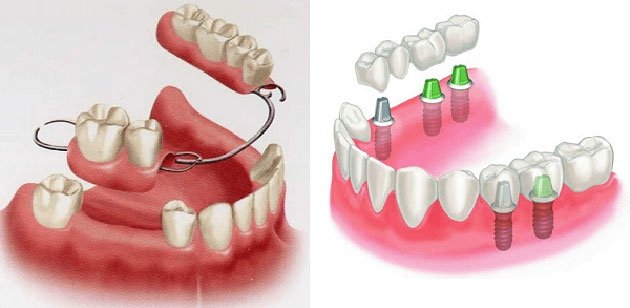
Unlike removable dentures—which often cause bulkiness, looseness, and inconvenience during use—fixed dental prosthetics are firmly secured to the jawbone or adjacent abutment teeth. This allows the patient to comfortably chew, communicate naturally, and not worry about the teeth shifting or falling out.
Superior Advantages of Fixed Dental Prosthetics
Fixed dental prosthetics are not merely a replacement for lost teeth but also bring many superior benefits in terms of function, aesthetics, and oral health. This is why more and more customers are choosing this method instead of using traditional removable dentures.
Restores Chewing Ability Like Natural Teeth
The fixed false tooth is firmly attached to the jawbone or adjacent abutment teeth, thereby providing a secure and stable chewing sensation. The patient can comfortably enjoy hard, tough foods like meat, nuts, and fruits without worrying about the teeth wobbling or falling out as when using removable dentures. The ability to properly grind food also helps the digestive system function more effectively, protecting overall health.
Natural Aesthetics, Confident Smile
With advanced porcelain crown manufacturing technology, the fixed false crown has a color, shape, and translucency closely resembling natural teeth. This helps restore a beautiful, even set of teeth, bringing a natural and confident smile in communication. Especially in the front tooth area—which directly affects facial aesthetics—fixed dental prosthetics are the optimal choice to regain facial harmony.
Prevents Jawbone Resorption
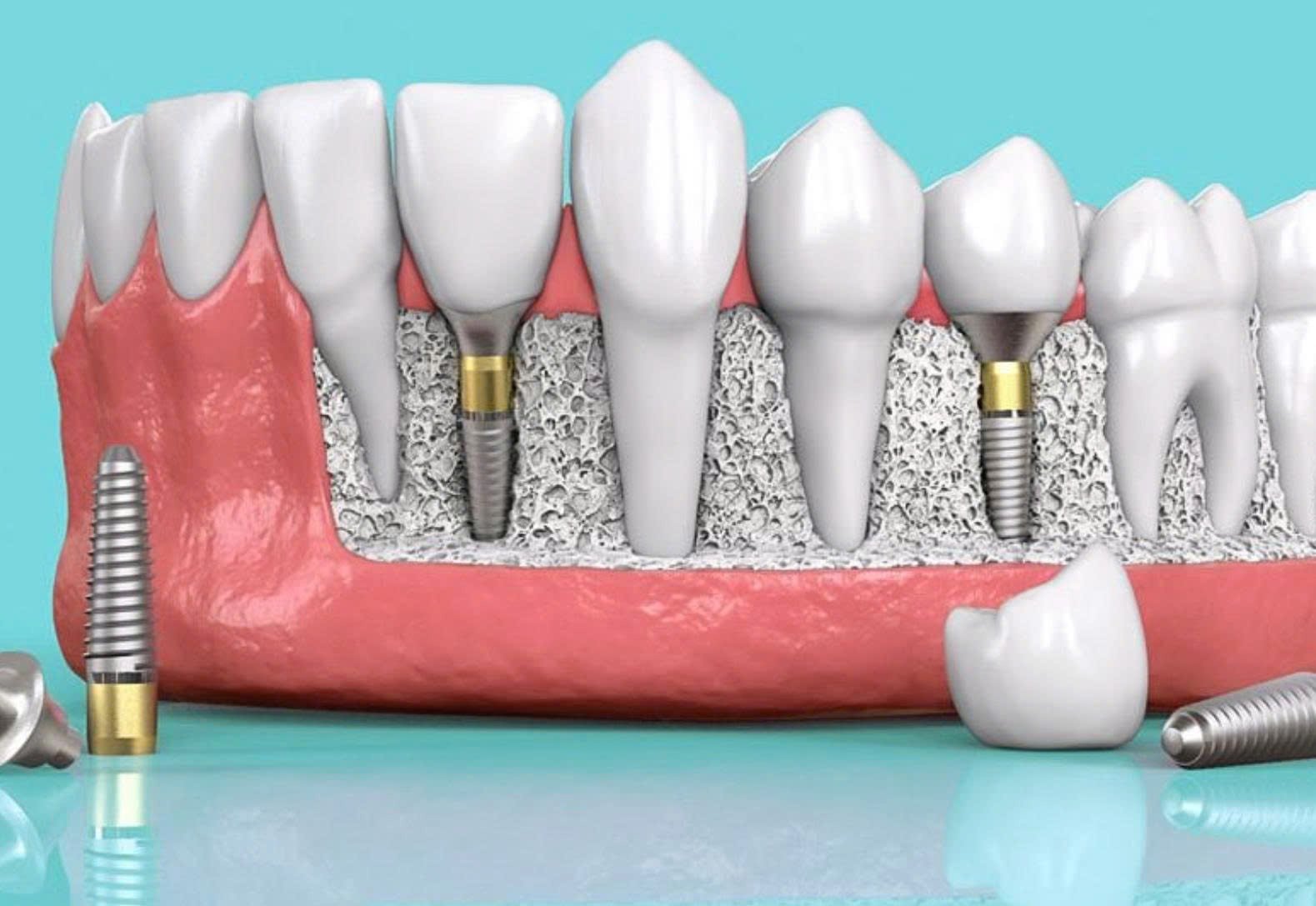
After tooth loss, the jawbone in that area gradually resorbs because there is no chewing force acting upon it. This leads to sunken cheeks, premature aging, and changes in facial structure. With Implant placement—a form of fixed dental prosthetic—the Titanium post replaces the natural tooth root and stimulates the jawbone, effectively preventing bone resorption. This is an advantage that removable methods cannot provide.
Long-Term, Permanent Durability
Fixed dental prosthetics, especially Implants, have a very high lifespan. If placed correctly and cared for well, Implants can be used for 20 years to a lifetime. Even a dental bridge—another fixed solution—can last an average of 7 to 10 years before needing replacement. This is a worthy investment that delivers long-term effectiveness.
Does Not Affect Adjacent Teeth
Unlike removable dentures that often put pressure on natural teeth or gums, fixed dental prosthetics are attached directly to the jawbone (Implant) or are designed to fit precisely, limiting invasiveness. Specifically, the Implant method helps maximally preserve natural teeth, without needing to grind down adjacent healthy teeth as required for a dental bridge. Thanks to this, the entire arch structure remains safely protected.
Most Popular Fixed Dental Prosthetic Methods Today
Currently, modern dentistry primarily uses two methods for fixed dental prosthetics: Implant placement and dental bridge. Each method has different characteristics, pros, cons, and costs, suitable for specific oral conditions.
Dental Implant Placement
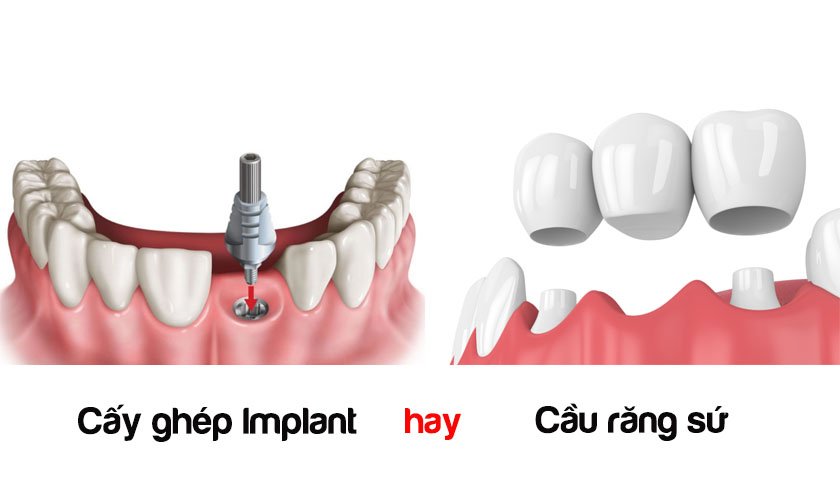
Dental Implant placement is the most advanced method, where a Titanium post is placed directly into the jawbone to replace the missing tooth root. On this post, the doctor attaches an Abutment connector and a porcelain crown, forming a complete tooth, including both the crown and the root.
-
Outstanding advantages: Restores both the tooth root and the crown, providing a natural feel like a real tooth. Prevents jawbone resorption, maintaining facial structure. High durability, can last a lifetime with good care. Does not affect surrounding healthy teeth.
-
Disadvantages: Higher cost compared to other methods. Longer treatment time (3–6 months) due to the need for the Implant post to integrate with the bone.
Dental Bridge
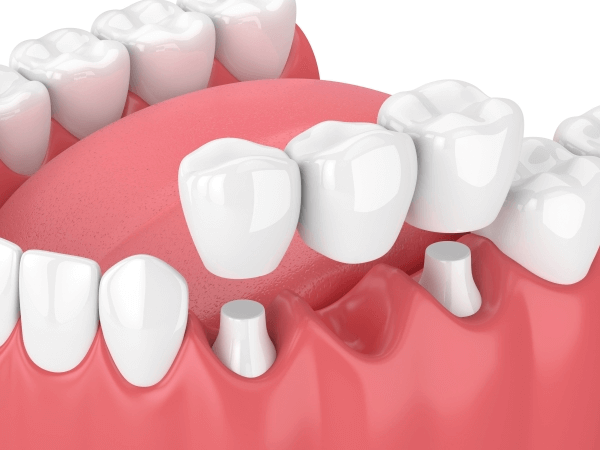
A dental bridge is performed by grinding down two adjacent natural teeth to serve as abutments, and then attaching a continuous bridge consisting of several porcelain crowns. The middle part of the bridge replaces the missing tooth.
-
Advantages: Lower cost than Implants. Quick completion time, usually only 3–7 days. Ensures aesthetics and improves chewing function.
-
Disadvantages: Requires grinding down healthy natural teeth to serve as abutments, potentially weakening the abutment teeth. Does not prevent jawbone resorption, which can affect facial structure in the long term. Average lifespan is only 7–10 years.
Should I Choose Dental Implant Placement or a Dental Bridge?
When facing the choice of fixed dental prosthetics, many people wonder whether to choose Implant placement or a dental bridge. Both methods are effective in restoring lost teeth, but each technique has its own advantages and disadvantages. Below are the important criteria to help you easily compare and decide which solution is best for you.
-
Durability & Lifespan: Implants can last 20+ years to a lifetime with good care; dental bridges typically need replacement every 7–10 years. Calculated by “cost/year of use,” Implants are often more economical in the long run.
-
Aesthetics: Both are aesthetic, but Implants maintain stable gum tissue and jawbone, so the gum line is natural and less likely to expose dark gaps over time; a dental bridge risks gum recession at the missing tooth site due to bone loss.
-
Natural Tooth Preservation: Implants are independent, not requiring the grinding of adjacent teeth. Dental bridges necessarily require grinding down 2 abutment teeth, which can cause long-term sensitivity, pulp inflammation, or weakening of the abutment teeth.
-
Initial Investment Cost: Implants have a higher upfront cost; dental bridges are initially cheaper but may incur future costs for replacement/abutment tooth treatment.
-
Jawbone Condition: If the bone has sufficient volume & density → prioritize Implants. If there is significant bone loss, bone grafting/sinus lift may be required; if not ready for bone intervention or needing quick restoration, a dental bridge is more suitable.
In summary, the choice depends on the CT Cone Beam film, overall health, and budget. If conditions permit, the Implant is still the “gold standard” due to its durability, aesthetics, and ability to prevent bone loss; a dental bridge is suitable when quick restoration is needed at a lower cost.
Who Should Get Fixed Dental Prosthetics?
Not everyone with tooth loss can immediately adopt this method. Correctly identifying the target patient helps achieve optimal results and limit risks during treatment.
Indicated Cases
-
Missing 1 single tooth: This is the most common indication. Implant placement or a dental bridge will help fill the gap, restore chewing function, and maintain aesthetics, especially for front teeth—a crucial position in the smile.
-
Missing multiple consecutive or non-consecutive teeth: For this condition, the doctor usually combines multiple Implant posts or creates a long dental bridge to replace all missing teeth. This method helps prevent adjacent teeth from shifting and ensures balanced occlusion.
-
Full arch tooth loss: People missing all teeth can choose full arch Implant placement (All-on-4, All-on-6). This modern technique uses a minimal number of posts but still secures the entire set of false teeth, saving costs while providing long-term effectiveness.
-
Young or middle-aged people seeking durable restoration: At this age, there is a need for strong chewing function and high aesthetic requirements. Fixed dental prosthetics, especially Implants, help ensure both these factors and extend the lifespan of the false teeth for decades.
Contraindications and Important Notes
-
People with uncontrolled chronic diseases: Patients with diabetes, heart disease, high blood pressure, etc., if not stably treated, face a high risk of complications during surgery. Only when the condition is controlled can the doctor consider Implant placement or a dental bridge.
-
Pregnant women: During pregnancy, all invasive procedures, especially Implant surgery, can affect the health of the mother and baby. Therefore, doctors usually advise waiting until after childbirth to proceed with treatment.
-
Heavy smokers: Nicotine in cigarettes reduces blood flow to the gums, hindering the healing process and making Implant posts difficult to integrate with the bone. Patients are advised to quit or significantly reduce smoking before the procedure.
-
Weak or significantly resorbed jawbone: This is a common condition in people with long-term tooth loss. Bone with insufficient volume or density will make it difficult for the Implant post to stand firm. In this case, bone grafting or sinus lift is required before placement.
-
People with financial constraints: Fixed dental prosthetics, especially Implants, require a higher cost than removable dentures. For patients with limited budgets, the doctor may advise a temporary solution before making a long-term investment.
How is the Standard Medical Procedure for Fixed Dental Prosthetics Performed?
One of the factors that makes customers concerned when considering fixed dental prosthetics is whether the implementation process is complicated. In reality, with the development of modern dental technology, the entire procedure follows international safety standards, is gentle, and minimally invasive. Here are the basic steps:
Step 1: Examination, CT Cone Beam X-ray, and Planning The doctor conducts a general examination of the oral condition, including the gums, jawbone, and occlusion. Then, a 3D CT Cone Beam X-ray is taken to assess bone density, height, and thickness, and determine the exact position for Implant post placement (or dental bridge). Based on this data, the doctor creates a personalized treatment plan for each patient, ensuring the highest accuracy and safety.
Step 2: Surgical Placement of the Implant Post into the Jawbone For the Implant method, the doctor performs surgery to place the Titanium post directly into the jawbone. The entire process is performed under local anesthesia, the procedure is gentle and quick, so it is virtually painless. After placing the post, the gum area is sutured for protection, and the patient is instructed on home care. (If a dental bridge is chosen, in this step the doctor will grind down the two adjacent abutment teeth to prepare for the bridge bonding.)
Step 3: Follow-up and Abutment Placement After approximately 3–6 months (depending on the body’s condition and bone density), the Implant post is firmly integrated into the jawbone. The doctor opens the gum to attach the Abutment connector—the part that links the Implant post and the porcelain crown. This is a crucial step that helps the false tooth stabilize and withstand force well during chewing.
Step 4: Impression Taking and Porcelain Crown Fabrication The doctor takes an impression of the dental arch to ensure the porcelain crown is manufactured with the correct occlusion and a color that matches the natural teeth. These parameters are sent to the lab for the dental technician to fabricate the porcelain crown using modern CAD/CAM technology, ensuring accuracy, durability, and aesthetics.
Step 5: Fixed Porcelain Crown Bonding and Completion When the porcelain crown is finished, the doctor permanently bonds it to the Abutment (for Implants) or cements it onto the abutment teeth (for dental bridges). The bite is then checked, adjusted as needed, and the customer is instructed on how to care for and clean their teeth. From this moment, the patient can chew and communicate confidently like having real teeth.
How Much Does Fixed Dental Prosthetics Cost?
The cost of fixed dental prosthetics is not the same for everyone but depends on various factors. Here are the important factors that directly affect the service price:
Type of Implant Post
There are many lines of Implants on the market with different qualities and prices. Korean Implant posts often have an affordable cost, suitable for many patients, while still ensuring stable durability. In contrast, premium Implants from the US or Switzerland are rated superior in bone integration capability and lifespan, and can be used for over 20 years or a lifetime. Therefore, the choice of Implant line significantly impacts the final cost.
Type of Porcelain Crown
After the Implant post is placed, the porcelain crown is attached on top to complete the function and aesthetics. If the customer chooses a Titanium porcelain crown, the cost will be lower, and the durability is quite good. However, premium porcelain lines like Zirconia or Cercon HT are more preferred due to their high load-bearing capacity, natural translucent color, and superior aesthetics, making the price higher.
Jawbone Condition
In cases of long-term tooth loss, the jawbone is often resorbed, lacking sufficient volume to hold the Implant post firmly. In this case, the doctor will prescribe bone grafting or sinus lift before Implant placement. These supplementary procedures increase the cost but make the treatment outcome safer and more durable.
Number of Teeth to be Restored
The cost of tooth placement is directly proportional to the number of missing teeth. If multiple teeth are missing, the patient needs more Implant posts or a longer dental bridge for restoration. Conversely, if only one tooth is missing, the cost will be significantly lower.
Doctor’s Expertise and Experience
This factor is less often mentioned but is extremely important. A highly experienced doctor with high expertise, who has successfully performed many Implant cases, will ensure a high success rate, minimize complications, and provide long-term effectiveness. Naturally, services at reputable dental clinics with modern equipment often have a higher cost, but the trade-off is absolute safety and peace of mind for the customer.
Answering Frequently Asked Questions (FAQ)
During the process of learning about fixed dental prosthetic services, customers often have many questions related to pain levels, durability, and completion time. Here are the most common questions and detailed answers from dental experts.
Is Fixed Dental Prosthetic Placement Painful?
This is the first worry for most patients. In reality, during Implant placement or dental bridge preparation, customers are given local anesthesia, so they feel virtually no pain. After the anesthesia wears off, there may be a sensation of mild soreness or dull ache for the first few days, but this is entirely controllable with pain relievers prescribed by the doctor. With modern technology and skillful technique, the fixed dental prosthetic procedure is quick, gentle, and does not cause fear as many people still think.
How Long Do Fixed Dental Prosthetics Last?
The lifespan of a fixed dental prosthetic depends on the chosen method and post-treatment care. With a dental bridge, the patient can typically use it for 7 – 10 years before needing replacement. In contrast, Implant placement is considered the most durable method, capable of lasting 20 years or even a lifetime if the patient maintains good oral hygiene, attends regular check-ups, and limits bad habits like smoking or teeth grinding.
How Long Does It Take to Complete Tooth Placement?
The completion time depends on the oral condition and the restoration technique. With a dental bridge, the entire process only takes about 3 – 7 days because it mainly involves grinding the abutment teeth and bonding the bridge. Conversely, Implants require a longer time, about 3 – 6 months, because the Titanium post must firmly integrate with the jawbone before the crown is attached. However, thanks to the development of immediate loading technology, some eligible cases can have a temporary tooth attached on the same day, ensuring aesthetics and chewing function while waiting for the permanent tooth.
Why Choose 3C Dental Clinic for Fixed Dental Prosthetics?
When deciding on tooth restoration, choosing the right reputable dental clinic is the most important factor determining the success of the entire process. At3C Dental Clinic, we are committed to providing customers with safe – aesthetic – durable fixed dental prosthetic services with the following superior advantages:
-
Team of Highly Skilled Doctors: All doctors are formally trained in Odonto-Stomatology, with many years of experience in the field of Implant and porcelain crown restoration. Not only are they technically proficient, but the team is also dedicated, providing thorough consultation so customers understand everything before treatment.
-
Modern Equipment: 3C Dental Clinic is equipped with a 3D CT Cone Beam system, Implant analysis software, and a CAD/CAM machine for precise porcelain crown fabrication. Advanced technology helps the tooth placement process be quick, safe, and minimally invasive.
-
Genuine Materials, Long-Term Warranty: We only use genuine imported Implant posts and porcelain crowns from reputable global brands such as Korea, the US, and Switzerland. Each customer receives a clear, transparent warranty card.
-
Absolute Sterilization Process: All surgeries are performed in a closed, sterile operating room, strictly adhering to the standards of the Ministry of Health. This ensures minimal risk of infection or post-treatment complications.
-
Dedicated Care Service: From welcoming and consultation to post-treatment follow-up, customers are meticulously supported. The customer care team is ready to assist and answer all questions throughout the restoration process.
Fixed dental prosthetics are a modern dental solution that comprehensively restores lost teeth in terms of both chewing function and aesthetics. Compared to traditional methods, this technique provides stability, durability, prevents bone loss, and maintains a confident smile long-term.
Whether choosing Implant placement or a dental bridge, customers receive practical value, significantly improving their quality of life. The important thing is to have an early examination so the doctor can assess the oral condition and propose the most suitable treatment plan.
At 3C Dental Clinic, we are committed to providing safe, aesthetic, and long-lasting fixed dental prosthetic services with a team of highly qualified doctors and modern equipment.

Don’t let tooth loss affect your health and confidence. Contact 3C Dental Clinic immediately for a free consultation and the most optimal restoration solution!