
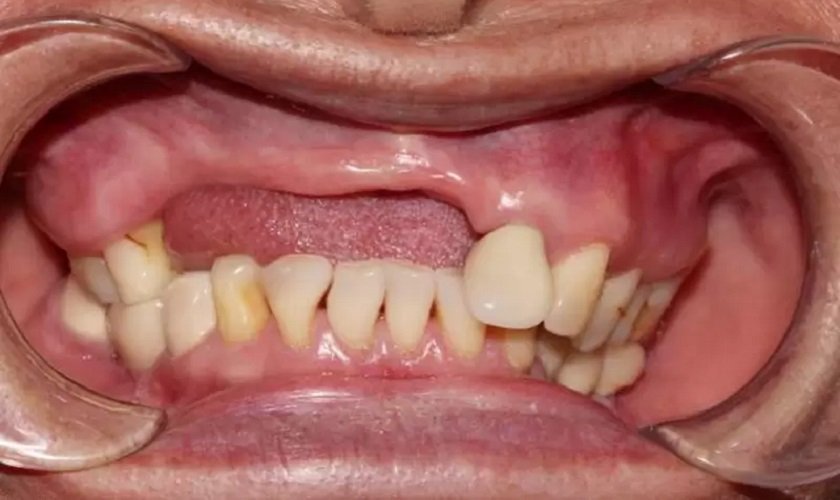
Losing 4 consecutive teeth not only affects aesthetics but is also a serious warning sign of oral health issues. Patients easily encounter difficulties with chewing, speech, and become self-conscious in communication. More seriously, this gap can lead to jawbone resorption, premature aging, and shifting of the remaining teeth. In this article, we will outline the causes, consequences, and the three most effective restoration solutions available today, helping you quickly regain your smile and confidence.
Common Causes of Losing 4 Consecutive Teeth
The simultaneous loss of 4 adjacent teeth is not uncommon, often stemming from severe oral diseases or external trauma. Correctly identifying the cause helps the doctor devise a suitable treatment and restoration protocol, and also helps you proactively prevent future occurrences.
Severe Periodontal Disease
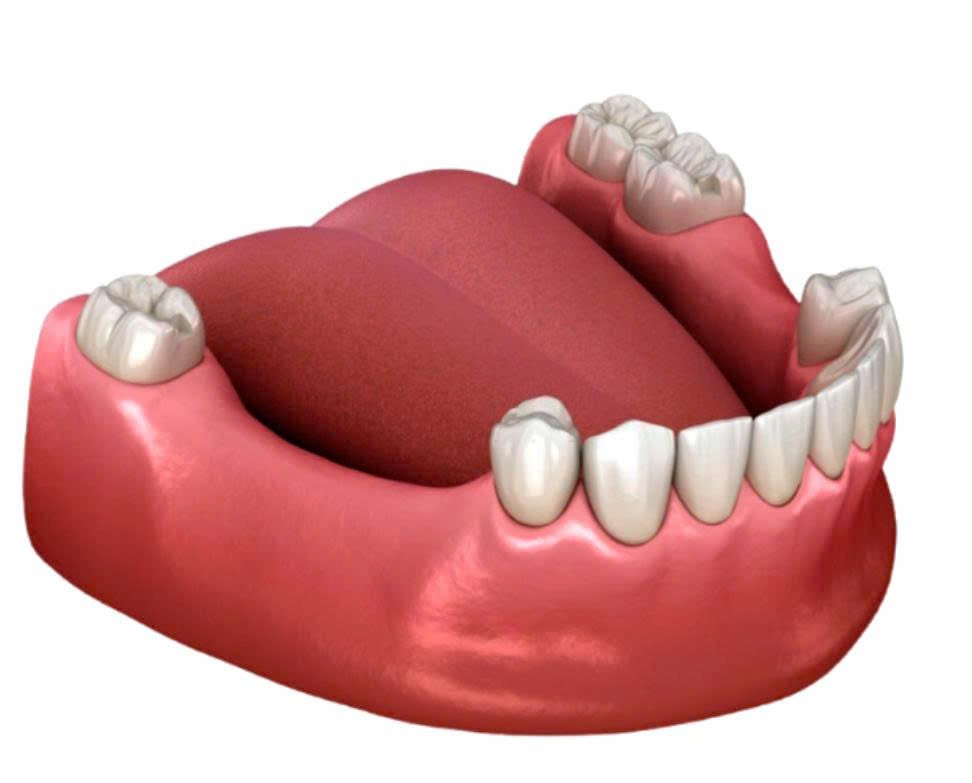
Progressive periodontitis is the leading cause of losing multiple teeth at once. Bacteria attack the gums and alveolar bone, destroying the tooth-supporting structures. As the gums and bone weaken, teeth become loose and easily fall out in groups. This is why many patients lose 3–4 adjacent teeth, particularly in the molar region.
Widespread Untreated Tooth Decay
If tooth decay is not detected and treated promptly, it can quickly spread to several adjacent teeth. When decay reaches the pulp, the teeth become infected, abscessed, and must be extracted en masse. This situation is common in people who are complacent and only seek treatment when the pain is severe, at which point tooth preservation is almost impossible.
Accidents and Trauma
Severe impacts from traffic accidents, falls, or sports injuries can also cause 4 adjacent teeth to fracture or be knocked out of the dental arch. In many cases, the teeth are too severely damaged to be restored and must be removed to prevent complications.
Systemic Diseases
Certain systemic diseases such as diabetes, osteoporosis, or immune deficiencies make teeth vulnerable and hinder recovery. These diseases affect the health of the gums, alveolar bone, and the ability to heal, putting multiple teeth at risk of falling out simultaneously.
Don’t Be Complacent! Severe Consequences of Losing 4 Consecutive Teeth
Losing 4 adjacent teeth is not merely an aesthetic deficit; it also entails many long-term consequences for oral health and the entire body. If not restored promptly, this condition can lead to the following outcomes:
Rapid and Severe Jawbone Resorption
The alveolar bone needs stimulation from the tooth root to maintain its density and volume. When 4 teeth are lost at the same time, the large gap causes the bone to resorb much faster than losing a single tooth. Over time, the gums recede, causing facial deformation and complicating future tooth replacement procedures.
Facial Aging, Sunken Cheeks, and Sagging Skin
Jawbone resorption leads to changes in the underlying facial support structure. People with multiple tooth loss often show signs of sunken cheeks, thinned lips, and wrinkled skin around the mouth, making the face look prematurely old. This is a common consequence in patients with long-term multiple tooth loss without restoration.
Serious Decline in Chewing Function
Losing 4 consecutive teeth makes biting, tearing, and grinding food difficult. Patients often have to chew on one side, causing bite imbalance. The stomach also has to work harder because food is not properly ground, potentially leading to digestive disorders in the long run.
Impact on Remaining Teeth
The teeth adjacent to the gap tend to tilt or drift, and the opposing teeth may over-erupt or drop down into the space. The result is malocclusion, difficulty in maintaining oral hygiene, and an increased risk of tooth decay and periodontitis for the remaining teeth.
Inaccurate Speech and Lisping
When 4 front teeth are lost, speech ability is distinctly affected. Patients easily mispronounce fricatives and sibilant sounds, causing lisping, which directly impacts communication and professional life.
Severe Loss of Confidence in Communication
The large gap when smiling or speaking makes many people reluctant to communicate and self-conscious in public. This not only affects their mental state but also negatively impacts their career and social relationships.
Summary of Restoration Solutions for Losing 4 Consecutive Teeth
Losing 4 adjacent teeth is a complex situation, but modern dentistry now offers many effective restoration solutions. Each method has its own pros and cons, suitable for the specific needs and financial conditions of the customer.
Solution 1: Removable Partial Dentures
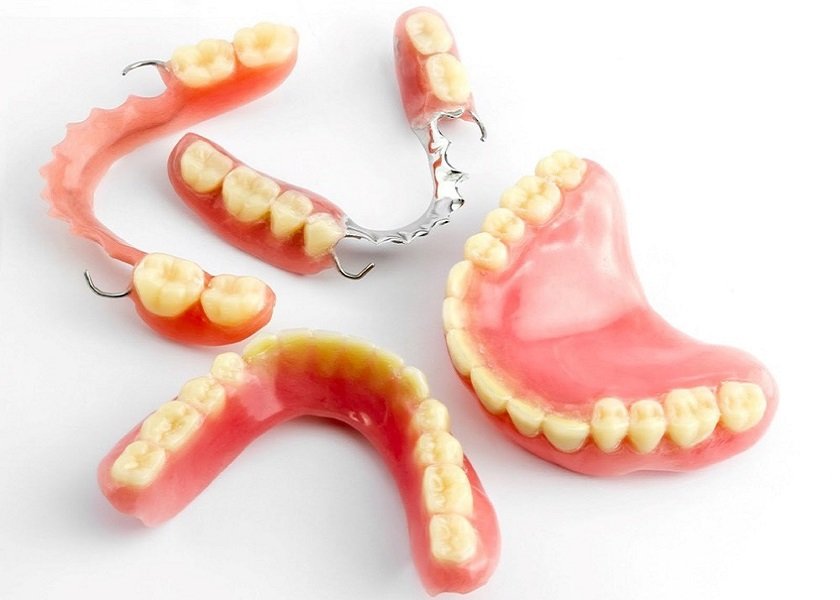
Removable dentures are fabricated from acrylic or combined with a metal framework, replacing the group of missing teeth.
-
Pros: Lowest cost among the methods, quick procedure time, easy to remove and clean.
-
Cons: Chewing ability only reaches about 30–40% of natural teeth, easily loose, feels cumbersome during use, limited aesthetics, and does not prevent jawbone resorption. Short lifespan, requiring periodic replacement.
-
Note: This should only be considered a temporary solution and is not recommended for multiple tooth loss.
Solution 2: Dental Bridge
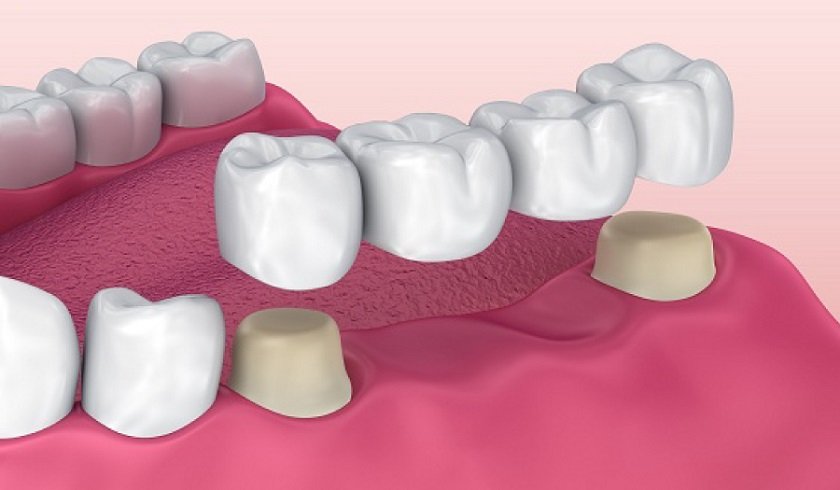
A dental bridge is a unit consisting of multiple linked porcelain crowns, where 2 natural teeth at both ends are ground down to serve as abutments, supporting the bridge that replaces the 4 missing teeth.
-
Pros: More reasonable cost than Implants, relatively high aesthetics, fixed securely in the mouth, and better chewing than removable dentures.
-
Cons: Requires grinding down 2 healthy adjacent teeth, reducing the lifespan of natural teeth. Does not prevent bone resorption in the missing area, and can cause bad breath if cleaning is inadequate. Over time, the abutment teeth may weaken, requiring re-restoration.
Solution 3: Dental Implants – The Optimal Solution
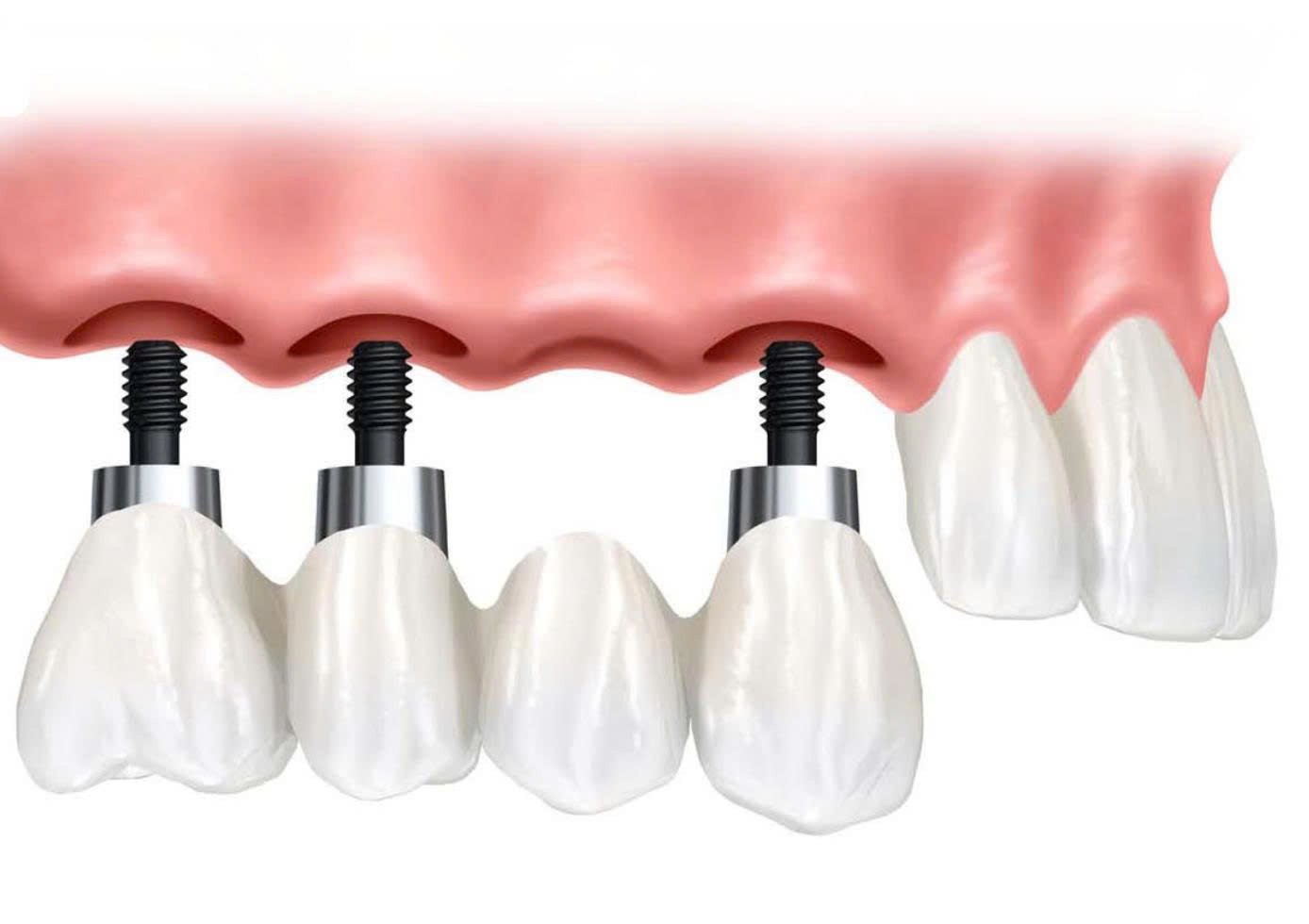
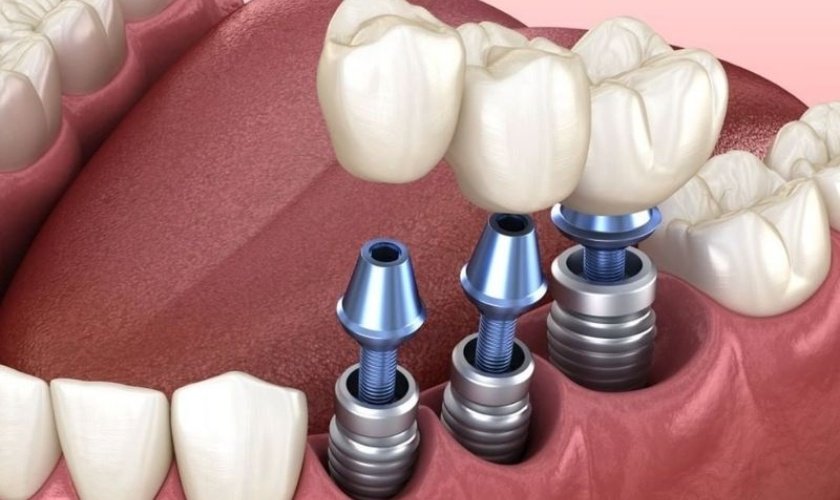
This is the most modern and most recommended method when 4 consecutive teeth are lost. Instead of placing 4 Implant posts for 4 teeth, the doctor typically only needs to place 2–3 Implant posts, and then restore a fixed 4-unit porcelain bridge onto these posts.
-
Pros:
-
Restores chewing function almost like natural teeth (over 95%).
-
Completely prevents jawbone resorption.
-
No need to grind adjacent teeth, maximizing natural tooth preservation.
-
High aesthetics, the Implant-supported teeth look natural.
-
Long lifespan, potentially permanent with good care.
-
-
Cons: Higher initial cost than other methods and requires a highly skilled doctor.
Criteria for Choosing the Restoration Method for 4 Consecutive Missing Teeth
The selection of a restoration method for 4 consecutive missing teeth cannot be applied uniformly to everyone. The doctor will rely on various criteria to provide the optimal solution that ensures chewing function while meeting the customer’s aesthetic needs and financial conditions.
Chewing Quality
Chewing ability is the top criterion to consider when choosing a restoration method. Removable dentures only provide about 30–40% of the chewing power of natural teeth, dental bridges reach about 60–70%, while Implants restore over 95%. For those who require strong chewing, especially for the molar groups, Implants are the preferred choice.
Cost
The cost of restoration is also a crucial factor determining the choice of method. Removable dentures have the lowest cost but are limited in durability and aesthetics. Dental bridges have a mid-range price, balancing cost and effectiveness. Implants have the highest cost, but when considering the long term, they are the most economical method due to their extremely high lifespan, potentially lasting a lifetime with good care.
Location of Missing Teeth
The location of the missing teeth directly influences the choice of restoration method. If 4 front teeth are missing, aesthetics are paramount, and Implants are often the optimal choice. If 4 back teeth (molars) are missing, chewing function is more important, and a dental bridge or Implant will be considered. Removable dentures may be applied to older individuals with weak jawbone health who are not suitable candidates for Implants.
3C Dental Clinic – Reputable and Safe Dental Implant Clinic
When restoring multiple teeth at once, especially in cases of losing 4 consecutive teeth, choosing a reputable dental clinic is the key factor determining success. At 3C Dental Clinic, we pride ourselves on offering comprehensive solutions, combining expertise, technology, and service to deliver optimal results for our customers.
-
Highly Skilled Doctor Team: Doctors at Nha khoa 3C have many years of experience in Implant placement and aesthetic porcelain restoration, and regularly participate in domestic and international training courses.
-
Modern Technology: Utilization of 3D CT Cone Beam scanners, virtual Implant planning software, and digital impression scanning technology, ensuring accurate diagnosis and designing a smile that suits each customer.
-
Genuine Materials: All Implant posts and porcelain crowns are imported directly from the US, Germany, and Korea, with quality certification and transparent warranty policies.
-
Medical Standard Procedures: All Implant surgeries are performed in a fully sterile operating room, ensuring safety and minimizing complications.
-
Customer Satisfaction: Thousands of successful restoration cases affirm the reputation and quality of service at 3C Dental Clinic.
With the combination of skill, technology, and service, Nha khoa 3C is the reliable choice for safely, durably, and aesthetically restoring your 4 consecutive missing teeth.

Frequently Asked Questions (FAQ)
When 4 consecutive teeth are missing, customers often have questions about the number of Implant posts required, the level of pain, and the treatment duration. Here are the common questions often asked and answered by Nha khoa 3C doctors:
How many Implant posts are needed for 4 consecutive missing teeth?
It is not always necessary to place 4 Implant posts. Typically, the doctor will prescribe 2–3 posts depending on the location of the missing teeth and the jawbone condition. A 4-unit porcelain bridge will then be permanently attached to these posts. This approach helps save costs while still ensuring chewing ability and aesthetics.
Is Implant placement for 4 missing teeth painful?
During the Implant placement process, the patient feels no pain at all thanks to modern anesthesia. After the anesthesia wears off, there may be a sensation of mild aching in the first few days. However, this condition is completely managed with pain medication and the doctor’s care instructions. Compared to the long-term effectiveness, this discomfort is very minimal and temporary.
How long does it take to restore 4 missing teeth with Implants?
Implant treatment time is usually divided into 2 phases:
-
Phase 1: Implant post placement (15–30 minutes per post).
-
Phase 2: After 3–6 months, when the post is securely integrated with the jawbone, the doctor attaches the final porcelain crown/bridge.
The total time can be shortened if the jawbone is good and the customer meets the health criteria. With modern technology, some cases can even receive a temporary restoration immediately after post placement.