
Dental prosthetics is the optimal solution for restoring lost teeth, improving chewing function, and aesthetics. Discover the popular tooth replacement methods available today: from removable dentures, dental bridges, to modern implants, to choose the solution that best suits you.
Tooth loss not only reduces the ability to chew but also affects facial aesthetics and confidence in communication. If this condition is left untreated, the jawbone will gradually resorb, teeth will shift, and lead to many difficult-to-remedy consequences. Therefore, choosing dental prosthetics is not simply an aesthetic matter, but also a solution to protect oral health and enhance the quality of life.
Currently, modern dentistry offers many different restoration options, from traditional methods like removable dentures and dental bridges to advanced Implant placement. Each technique has its own advantages and limitations, suitable for different patient needs and conditions. In this article, we will explore each method in detail, compare their effectiveness and cost, and find out which is the most optimal solution to regain a complete smile.
Dental Implants – The Comprehensive Solution for Tooth Replacement
What is Dental Implant Placement?
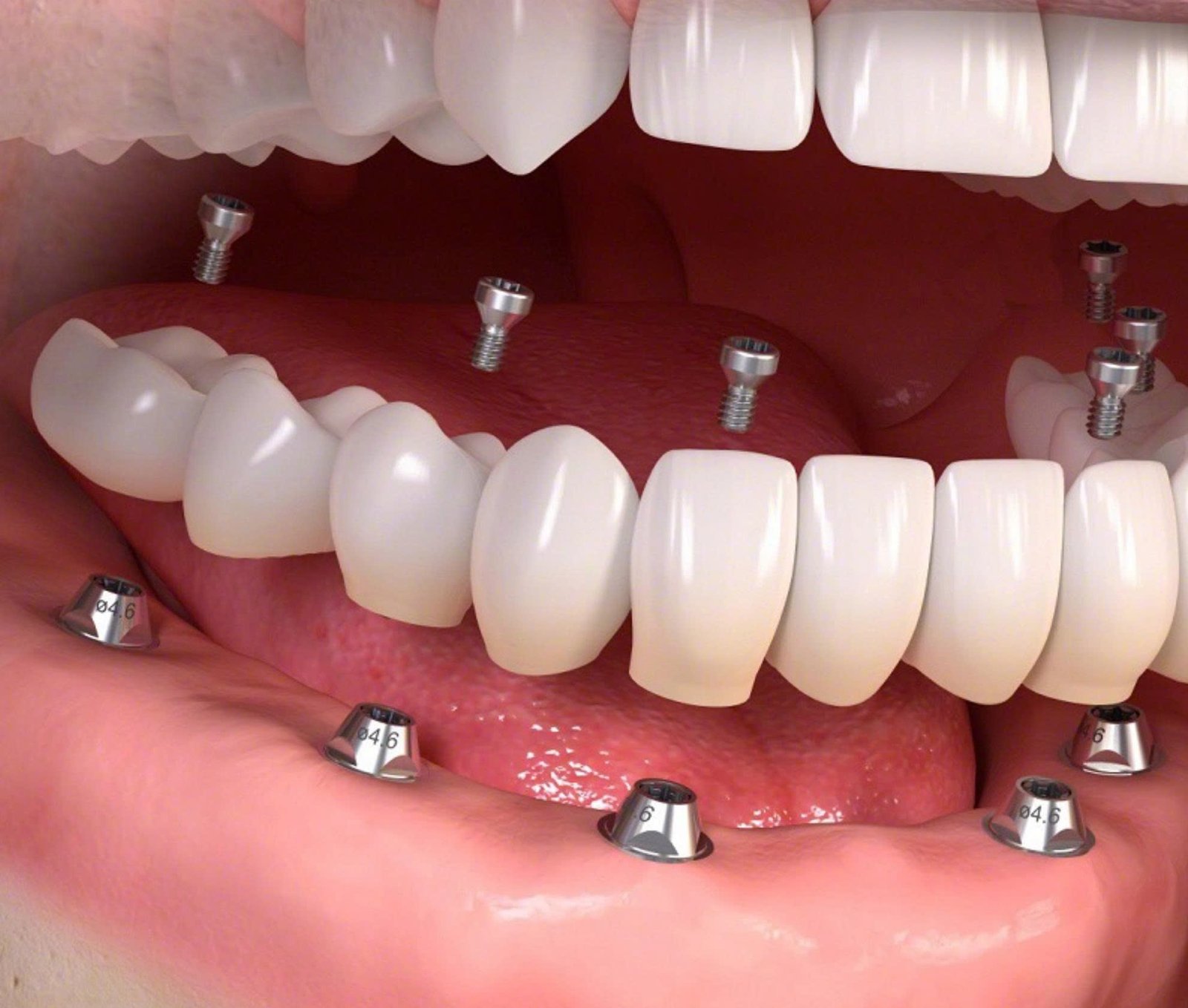
When talking about modern dental prosthetics, the Implant method is almost the preferred choice. Instead of only recreating the crown portion like a dental bridge or removable denture, an Implant helps restore the entire lost tooth structure, including the root deep within the jawbone. As a result, Implant teeth are not only aesthetic but also structurally durable, providing a natural feel like real teeth.
A complete dental implant consists of three parts. First is the Implant post, usually made from Titanium—a biomedical material with excellent biocompatibility, which is placed directly into the jawbone to replace the natural tooth root. Next is the Abutment connector, which acts as an intermediary linking the Implant post and the crown. Finally, the porcelain crown is meticulously crafted, mimicking the exact shape and color of the natural tooth, ensuring high aesthetics.
The special feature of the Implant technique is its almost absolute biocompatibility. After being placed in the bone, the Titanium post gradually integrates firmly through the process of “osseointegration,” creating a strong foundation for the crown above. Thanks to this mechanism, the Implant can last long-term, possibly a lifetime if cared for properly, far exceeding the lifespan of other tooth replacement methods.
Outstanding Advantages of the Dental Implant Method
Prevents Jawbone Resorption: After tooth loss, the jawbone gradually resorbs because there is no chewing force acting upon it. The Implant, with its Titanium post placed directly into the bone, helps maintain stable bone density, prevents sunken cheeks, and keeps the face youthful and balanced. This is the biggest difference that removable dentures and dental bridges cannot achieve.
Chewing Ability Like Natural Teeth: With the strong foundation provided by the Implant post, you can chew comfortably, even hard or tough foods. The natural feel, almost like a real tooth, makes meals more enjoyable and the digestive system more efficient.
High and Natural Aesthetics: The porcelain crown on the Implant is meticulously crafted, mimicking the shape and color of a real tooth, resulting in a harmonious smile. Unlike removable dentures that can be easily visible, an Implant tooth is almost indistinguishable from a natural tooth.
Superior Durability: While a dental bridge or removable denture only lasts from a few years to just over 10 years, an Implant can be used durably for over 20 years, even a lifetime with proper care.
Preserves Natural Teeth: The Implant technique does not require grinding adjacent teeth, maintaining the integrity and strength of the natural teeth—something a dental bridge cannot provide.
Disadvantages and Cost of Dental Implants
High Cost: Implants have a much higher cost than other methods. However, considering the long-term effectiveness and near-permanent lifespan, this is a reasonable and ultimately cost-effective investment.
Extended Treatment Time: Typically, it takes 3–6 months for the Implant post to fully integrate into the jawbone. This makes many patients, especially Vietnamese expats on short trips home, hesitant. However, at Nha khoa 3C, the immediate loading Implant technique allows for the attachment of a temporary tooth within 48 hours, enabling patients to chew and communicate normally while waiting for integration.
Requires Complex Technique: This method demands highly skilled doctors and modern equipment. Therefore, choosing a reputable dental clinic to ensure the safety and success of the placement is the decisive factor.
Who is Suitable for Dental Implants?
People Missing One or More Single Teeth: Implants are the ideal solution for single tooth loss because they provide independent restoration without needing to grind adjacent natural teeth.
People Missing Multiple Teeth Consecutively or a Full Arch: The All-on-4/All-on-6 technique only requires 4–6 Implant posts to support an entire fixed dental bridge, saving costs while ensuring solid chewing function.
People with Good Jawbone and General Health: Implants are suitable for patients with sufficiently strong jawbone and those who do not have severe systemic diseases. In cases of long-term bone loss, the doctor may prescribe bone grafting or sinus lift procedures to increase the success rate.
Dental Bridge – The Quick and Aesthetic Restoration Solution
Compared to Implants, a dental bridge is considered a popular option due to its fixed nature, more reasonable cost, and quick completion time. This is an older method but is still chosen by many patients, especially those missing one or a few single teeth.
What is a Dental Bridge?
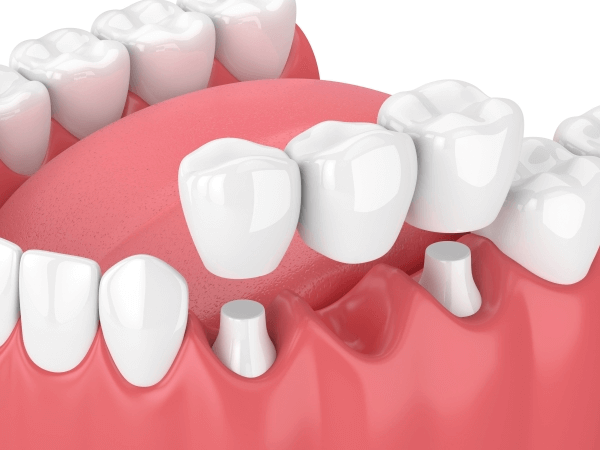
When one or a few teeth are lost on the arch, many people worry about impaired chewing, facial imbalance, and lost confidence in their smile. In these cases, a dental bridge is a widely used restoration solution. This is a fixed technique, meaning after it is bonded to the arch, the bridge stays firmly in the missing tooth position and cannot be removed like traditional dentures.
The structure of a dental bridge is quite simple but effective. The doctor will grind down two healthy natural teeth adjacent to the gap to act as supporting pillars. On this foundation, a continuous bridge consisting of several fused porcelain crowns will be fabricated and permanently bonded, replacing the missing tooth. These porcelain crowns are designed with a color and shape similar to real teeth, making the denture look natural, harmonious, and restoring the chewing function.
The highlight of a dental bridge is the quick completion time; in just a few appointments, you can have a complete set of teeth. This is an intermediate choice for those who want good aesthetic results and stable chewing but are not ready to invest in a more modern method like a dental implant.
Advantages of the Dental Bridge Method
Quick Completion Time: Patients only need about 2–3 appointments to complete the dental bridge. In the first session, the doctor grinds the abutment teeth and takes impressions. In the subsequent session, the finished porcelain bridge is bonded permanently to the arch. Compared to Implants, which require several months for bone integration, a dental bridge significantly shortens the time, offering convenience for those needing urgent restoration, such as before an important event or Vietnamese expats with a short stay in Vietnam.
More Reasonable Cost Compared to Implants: In terms of price, a dental bridge is in the mid-range segment. You don’t have to spend a large amount of money like with an Implant yet still get a fixed, much more stable solution than a removable denture. Therefore, many consider a dental bridge a “mid-way solution”—both cost-effective and relatively good at meeting aesthetic and chewing needs.
Improved Chewing and Aesthetics: A dental bridge can withstand chewing forces better than a removable denture. Users can eat more comfortably, with less feeling of looseness or bulkiness. Aesthetically, the porcelain crown is crafted based on the natural tooth model, so the color is harmonious, creating a natural look when smiling or talking. For those missing front teeth or teeth in easily visible areas, a dental bridge provides noticeable confidence in daily communication.
Disadvantages of a Dental Bridge
Requires Grinding Adjacent Natural Teeth: This is considered the biggest drawback of a dental bridge. To create support pillars for the bridge, the doctor must grind down two healthy teeth adjacent to the gap. This grinding process removes the natural protective enamel from the abutment teeth, making them more sensitive to hot and cold temperatures and increasing the risk of decay and pulp inflammation in the long term. In other words, even if you only lost one tooth, you have to “sacrifice” two additional healthy teeth, which makes many patients hesitate when choosing this method.
Does Not Prevent Jawbone Resorption: A dental bridge only restores the crown portion above the gum line, with absolutely no effect on the underlying jawbone. Without an artificial tooth root, the alveolar bone will continue to resorb over time. The consequence is that the gum tissue under the bridge may recede, creating a gap that causes aesthetic issues and makes cleaning difficult. This is a clear limitation when compared to Implants—which integrate directly with the bone, maintaining bone density long-term.
Shorter Lifespan Than Implants: On average, a dental bridge can last 7–10 years, after which it needs to be replaced to ensure effective chewing and aesthetics. The replacement process not only incurs additional costs but also progressively weakens the abutment teeth. Conversely, Implants, if placed correctly and cared for well, can last a lifetime, requiring almost no replacement. This leads many patients to view a dental bridge as a temporary rather than a long-term solution.
When Should You Choose a Dental Bridge?
Missing One to Three Adjacent Teeth: A dental bridge is most effective in cases of missing few teeth, especially front teeth or premolars, where high aesthetics and moderate load-bearing capacity are required. With the support of two abutment teeth, the dental bridge can quickly fill the gap, providing a confident smile in just a few days of treatment.
Patients Who Want to Save Cost and Time: Compared to Implants, a dental bridge has a lower cost and a quick completion time. This is a reasonable choice for those who are not financially prepared to invest in Implants or need urgent restoration, such as Vietnamese expats only staying in Vietnam for a few weeks. Although not as durable as Implants, a dental bridge still offers good aesthetic and chewing results in the short term.
People with Stable Oral Health: A dental bridge requires the two adjacent abutment teeth to be very healthy, strong, and free of periodontal disease. If the abutment teeth do not meet the standards, the risk of the entire bridge failing is very high. Therefore, this method is suitable for patients with a good dental foundation, healthy gums, and who want a quick, neat, and budget-friendly solution.
Removable Dentures – The Cost-Effective Restoration Solution
Among the methods for tooth replacement, removable dentures are the traditional choice, associated with many generations of patients. This solution has the lowest cost, requires no surgery or complex techniques, and is therefore particularly popular among the elderly or those who do not have the financial means for a dental bridge or Implant. Although removable dentures are no longer the optimal method today, in many cases, they still serve as a temporary solution, helping to partially improve chewing function and aesthetics.
What are Removable Dentures?
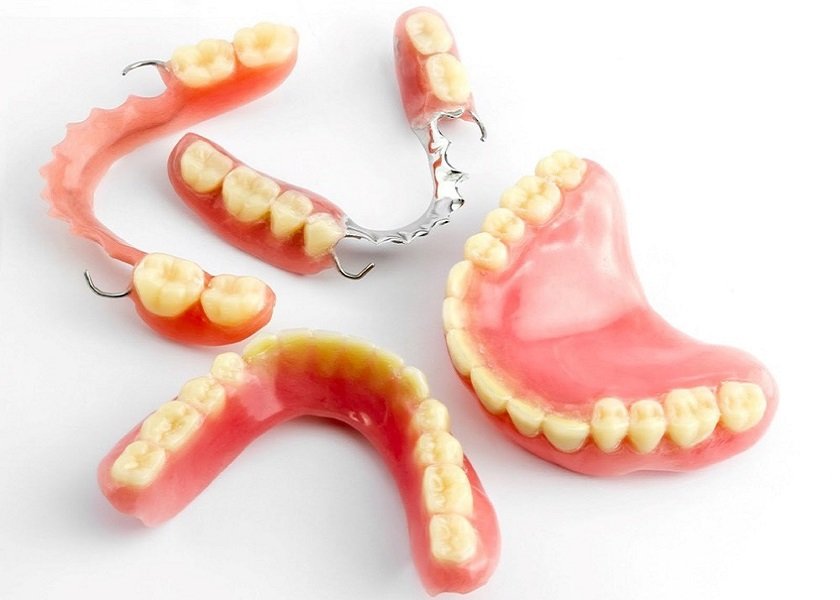
Traditional Restoration Method: Removable dentures are fabricated from a rigid plastic base or a metal framework, on which plastic or porcelain false teeth are attached. Users can easily remove them for cleaning and put them back in when needed. This is the oldest restoration technique in dentistry, often applied in cases of multiple missing teeth or total tooth loss.
Convenience with Limitations: The highlight of removable dentures is that they can replace multiple teeth at once without surgery. However, because they only rest on the gums or rely on metal clasps on adjacent natural teeth, their stability is not high. Consequently, the sensation during chewing and communication is often not as comfortable as with a dental bridge or Implant.
Advantages of Removable Dentures
Low Cost, Easy Access: This is the biggest advantage that makes removable dentures chosen by many. The cost is only a fraction of a dental bridge or Implant, suitable for patients with limited financial conditions. Especially for the elderly, investing in a cheap, quick, and easy method still brings practical benefits.
No Surgery Required, Safe for Frail Health: Unlike Implants which require intervention in the jawbone, a removable denture is simply fabricated based on the mouth impression. This allows patients to avoid surgery and long recovery times, making it particularly safe for those with frail health or systemic diseases that prevent Implant placement.
Easy to Remove and Clean: Patients can remove the denture for daily brushing, ensuring easier hygiene compared to a dental bridge, which is difficult to floss. This is a small advantage but is highly valued by many elderly people.
Disadvantages of Removable Dentures
Limited Chewing Ability: Removable dentures are often loose and do not withstand force well, making it difficult for patients to eat hard, tough foods. Many are forced to change their eating habits, choosing only soft or liquid foods, leading to nutritional deficiencies and long-term effects on digestive health.
Bulkiness and Unnatural Feel: Because they are not fixed to the bone or real teeth, removable dentures easily shift when talking or smiling. This creates a loose, uncomfortable feeling, sometimes causing users to avoid communication. Aesthetically, removable dentures are also not as natural as porcelain crowns or Implants, easily revealing artificial signs.
Do Not Prevent Bone Resorption, Low Lifespan: Since they only replace the tooth crown above the gum line, removable dentures have absolutely no effect on the underlying jawbone. Over time, the bone continues to resorb, making the denture base loose and requiring adjustment or replacement. Typically, after a few years, the patient must have a new denture made to maintain effectiveness.
Who Should Use Removable Dentures?
The Elderly: Removable dentures are suitable for the elderly, who are often accustomed to soft, light diets and do not prioritize high aesthetic demands. This is an economical, minimally invasive solution that helps them partially improve chewing and aesthetics when smiling and talking.
People Missing Many Teeth or a Full Arch: In cases of a large number of missing teeth, especially a full arch, removable dentures remain a common choice. Although not as optimal as Implants, they still help patients partially restore function and improve appearance in the short term.
Patients with Limited Finances or Frail Health: For those who cannot afford Implants, or have systemic diseases that make surgery risky, removable dentures are a safe, accessible, and reasonable temporary solution.
Overall Comparison of Dental Prosthetic Methods
Each method of tooth replacement—from traditional removable dentures, dental bridges, to modern Implants—has its own advantages and limitations. To help you choose easily, we will compare them based on the following important criteria.
Cost: In terms of price, removable dentures are the cheapest method, suitable for the elderly or those with financial limitations. A dental bridge is in the mid-range segment, moderate for most customers’ budgets. Meanwhile, Implants are the highest-cost option, but in the long run, they are more economical due to their near-lifelong durability, with little need for replacement.
Durability and Lifespan: Removable dentures typically only last a few years before needing replacement due to progressive jawbone resorption. A dental bridge has a lifespan of about 7–10 years, after which it needs replacement to ensure effectiveness. Implant, if placed correctly and cared for well, can last over 20 years, even a lifetime.
Chewing Ability: Removable dentures provide weak chewing force, often requiring users to restrict many types of food. A dental bridge offers better chewing improvement, sufficient for daily activities. However, the Implant method is the one that restores chewing function almost completely, allowing you to enjoy any food without worry.
Aesthetics: Removable dentures are easily exposed as artificial, lacking naturalness when smiling and talking. A dental bridge has higher aesthetics, especially when using all-porcelain crowns, but still risks gum recession over time. Implants are superior in aesthetics thanks to crowns that mimic real teeth and maintain stable gums and bone long-term, providing a natural and durable smile.
Prevention of Jawbone Resorption: This is a criterion that only the Implant meets. Removable dentures and dental bridges cannot prevent the bone resorption process, leading to sunken cheeks and facial aging. The Implant post integrates into the jawbone like a real tooth root, helping to maintain stable bone density.
Treatment Time: Removable dentures are the fastest, only taking a few days for a new set of teeth. A dental bridge is also quite fast, usually completed after 2–3 appointments. Implants require the most time, from 3–6 months for the post to integrate into the bone. However, with immediate loading Implant technology at modern clinics like Nha khoa 3C, patients can have a temporary tooth attached within 48 hours, ensuring normal chewing and communication while waiting for permanent restoration completion.
Suitable Patient: Removable dentures are suitable for the elderly, those with frail health, or limited finances. A dental bridge is appropriate for those missing few teeth and having strong abutment teeth. Implants are suitable for almost all cases of tooth loss, from a single missing tooth to a full arch, provided health and jawbone conditions allow.
Overall, if you need a temporary, cost-effective solution, removable dentures are suitable. If you want quick restoration at a moderate cost, a dental bridge is a reasonable option. But if you desire a durable, comprehensive solution in both aesthetics and function, the Implant is the most worthwhile investment.
Frequently Asked Questions About Dental Prosthetics (FAQ)
When researching tooth replacement methods, many patients worry about safety, completion time, cost, or which option is best. Below are the most common questions and detailed answers from a professional perspective, helping you feel more confident before making a decision.
Is Dental Prosthetic Placement Painful?
Sensation During the Procedure: The majority of patients fear that Implant placement or tooth grinding for a bridge will cause pain. In reality, all modern dental procedures are performed under the effect of local anesthesia or sedation, so during the treatment, you feel almost no pain. For Implants, the process of placing the Titanium post into the jawbone is gentle and much faster than imagined.
Sensation After Treatment: After the anesthesia wears off, you may feel mild soreness or gum swelling for 1–2 days, but this condition is entirely manageable and will quickly subside with prescribed pain relievers and anti-inflammatories. Compared to the long-term benefits such as solid chewing and aesthetic maintenance, this temporary discomfort is completely worthwhile.
How Long Does Tooth Replacement Take?
Depending on the Method: If you choose a removable denture, it only takes a few days to complete the new teeth. With a dental bridge, the process usually takes about 2–3 appointments, including grinding the abutment teeth and bonding the porcelain bridge. The Implant is the most time-consuming method, averaging 3–6 months for the post to integrate firmly with the jawbone.
Technology to Shorten Time: Currently, at advanced dental clinics like Nha khoa 3C, patients can utilize the immediate loading Implant technique, allowing for the attachment of a temporary denture within 48 hours after post placement. This is very convenient for Vietnamese expats or those with busy schedules, as you can still chew and communicate normally while waiting for the permanent restoration to be completed.
Which Type of Dental Prosthetic is Best?
Each Method Suits Different Needs: A removable denture has the advantage of low cost, suitable for the elderly and those with financial limitations. A dental bridge is fast, has good aesthetics, and is suitable for cases of missing few teeth. The Implant is comprehensive and durable, considered the “gold standard” in tooth replacement, but has a higher cost and longer treatment time.
Criteria for Choosing the Right Solution: The important thing is to consider your oral health condition, financial capacity, and long-term desires. The doctor will rely on CT scans, jawbone status, and overall health to advise on the most suitable option. In most cases, the Implant is still the best long-term choice because it restores both the root and the crown, prevents bone resorption, and maintains a natural smile.
What is the Current Cost of Dental Prosthetics?
Reference Price Range by Method: Removable dentures have the lowest price, typically starting from a few million VND (local currency). A dental bridge has a medium cost, fluctuating depending on the type of porcelain (from a few million to over ten million for each bridge). The Implant is the most premium method, with the cost per post potentially starting from tens of millions VND, especially for high-end Implant lines from the US or Switzerland.
Factors Affecting the Price: In addition to the method, the cost also depends on the number of missing teeth, the type of material used, the jawbone condition (whether bone grafting is needed), and the doctor’s expertise. Therefore, to know the exact investment level for your case, patients should visit the dental clinic directly for examination and detailed consultation.
Why Choose 3C Dental Clinic for Dental Prosthetics – The Top Choice for Vietnamese Expats
For many Vietnamese expats, returning home for dental work is not only a cost-saving choice but also a desire to find a reputable, professional dental clinic that meets international standards. Nha khoa 3C is the trusted destination for thousands of customers both domestically and internationally thanks to the convergence of key factors: skilled doctors, modern technology, reasonable costs, and dedicated service.

Highly Qualified, Experienced Medical Team The medical team at 3C Dental Clinic are all formally trained in Odonto-Stomatology and have many years of experience in Implant restoration, especially complex full arch cases. With solid skills and an understanding of international dental trends, the doctors at 3C have brought success to thousands of tooth replacement cases, including Vietnamese expat patients with various conditions. This is the assurance that customers can trust that the restoration results will meet standards for both function and aesthetics.
Modern Implant Technology, Shortening Treatment Time
One of the biggest hurdles for Vietnamese expats when getting dental implants is the limited time budget. At 3C Dental Clinic, the entire process is supported by the 3D CT Cone Beam system, Implant simulation software, and a modern CAD/CAM lab, ensuring speed and accuracy. Crucially, the immediate loading Implant technology allows patients to have a temporary tooth within 48 hours after post placement, enabling them to chew and communicate confidently during the Implant integration period. This is the ideal solution for those who cannot stay long in Vietnam.
Reasonable Costs, Significant Savings Compared to Overseas
In countries like the US, Australia, or Canada, the cost of full arch Implant placement can be 2–3 times higher than in Vietnam. When choosing 3C Dental Clinic, customers only pay a fraction, but the service quality and materials are still guaranteed to be genuine imports with transparent documentation. This allows Vietnamese expats to significantly save costs while still accessing international-standard dental services right in their homeland.
Dedicated Service, Understanding Vietnamese Expats’ Needs
Beyond expertise and technology, 3C Dental Clinic also stands out for its thoughtful customer care service. With an understanding of the specific needs of Vietnamese expat customers, 3C provides online consultation before returning home, flexible appointment scheduling, and treatment time optimization. After the restoration is complete, customers also receive remote periodic monitoring and detailed guidance on dental care. This dedication helps Vietnamese expats save time and feel close and reassured when returning home for treatment.
Dental prosthetics not only help restore chewing function but also bring a confident smile and prevent many long-term consequences caused by tooth loss. Depending on your needs and conditions, you can choose removable dentures, a dental bridge, or an Implant—with the Implant still being the most comprehensive and durable solution. If you are a Vietnamese expat looking for a reputable, modern clinic with reasonable costs, Nha khoa 3C is the reliable choice. Contact us today for a free consultation and to plan the most suitable tooth restoration for you.