
Total tooth loss severely impairs your chewing ability, accelerates facial aging, and causes a significant loss of confidence. Discover modern full arch dental prosthetic solutions that restore your smile and a fulfilling life.
Total tooth loss is not merely a situation of “no teeth left for eating,” but a serious problem that directly affects the patient’s health, appearance, and spirit. When all teeth are gone, chewing function is completely compromised, the face rapidly ages, and confidence in communication almost vanishes.
In this context, full arch dental prosthetics become the comprehensive restoration solution, helping to regain chewing ability, rebuild facial aesthetics, and restore a bright smile. This is not just an aesthetic choice but an investment in long-term health and quality of life.
Severe Consequences of Long-Term Full Arch Tooth Loss
Many people with total tooth loss tend to hesitate, thinking, “If I don’t have teeth, a simple removable denture will do.” However, the reality is that allowing this condition to persist without timely prosthetic solutions can lead to severe complications in both health and appearance.
Complete Loss of Chewing Function, Affecting the Digestive System
Without teeth, eating becomes a major challenge. Patients can only choose soft, liquid foods like porridge, soup, or milk, while nutritious foods like meat and hard vegetables are almost impossible to consume. Consequently, the digestive system becomes overloaded because food is not properly chewed, eventually leading to digestive disorders and overall health decline. Many people suffer from severe weight loss and nutritional deficiencies simply because they cannot eat normally after losing all their teeth.
Rapid Jawbone Resorption and Facial Deformity
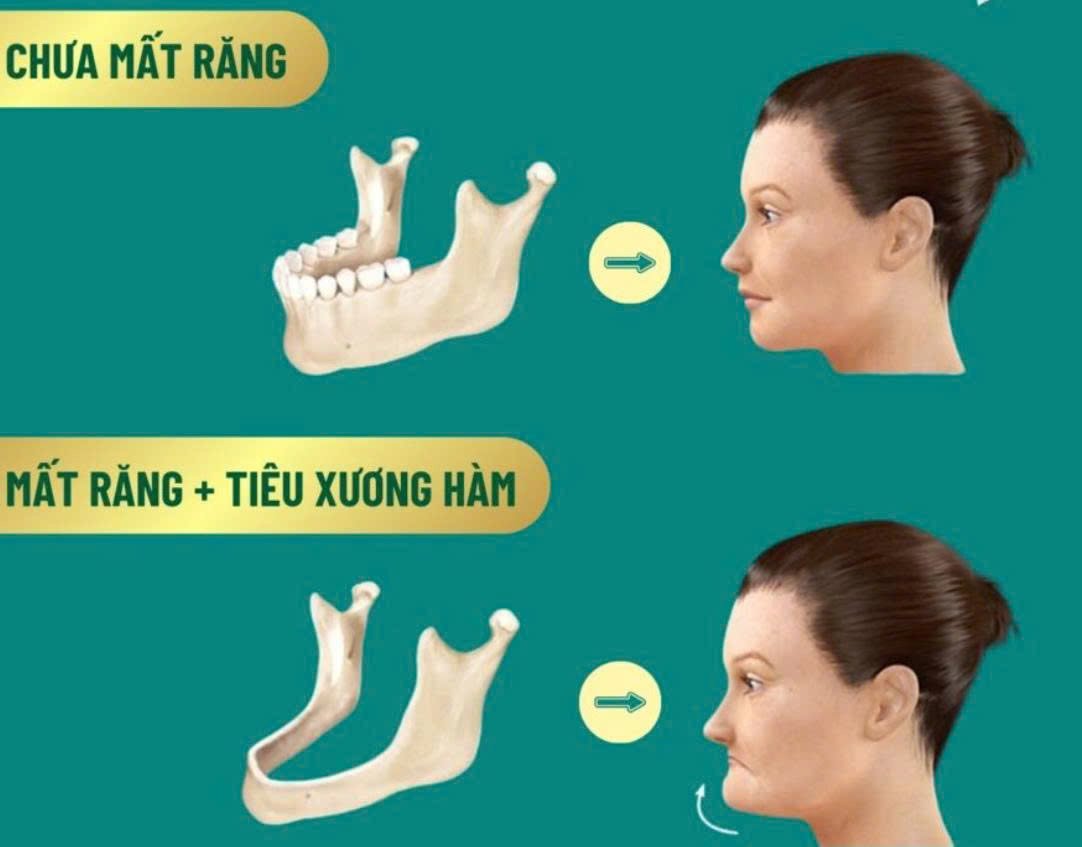
One of the most severe consequences of total tooth loss is jawbone resorption (bone loss). When teeth are lost, the alveolar bone no longer receives the stimulation of chewing force and gradually deteriorates. This widespread condition causes the face to become hollowed-out (sunken cheeks), retruded, skin to sag, and premature aging. Patients not only lose their natural smile but also suffer severe impact on their appearance, looking much older than their actual age.
Impact on Speech, Causing Lisping
Few realize that teeth are not only for chewing but also play a crucial role in speech. When all teeth are lost, the airflow in the mouth is no longer precisely controlled, leading to lisping or unclear pronunciation. This directly affects communication, especially for those who frequently interact or work in social environments.
Severe Impact on Psychology and Self-Confidence
The inability to smile comfortably, difficulty eating, and facial deformity—all these factors gradually erode the patient’s inherent self-confidence. They often avoid social interaction, limit public appearances, and may even fall into prolonged feelings of inferiority and depression. Studies show that total tooth loss is closely linked to an increased risk of depression, particularly among middle-aged and older adults.
The Most Popular Full Arch Dental Prosthetic Solutions Today
When all teeth are lost, many believe the only option is removable dentures. However, modern dentistry has developed many new methods, from traditional to advanced, to provide suitable options for every patient. Here are the three most common solutions for full arch rehabilitation.
Full Removable Dentures – The Traditional Solution
Full removable dentures are the oldest method, widely used for people with total tooth loss. The denture structure includes a plastic base that adheres to the gums and a full set of false teeth made of plastic or porcelain. Users can easily remove them for cleaning and put them back in when needed.
The biggest advantage of this method is its low cost, making it suitable for many people, especially the elderly or those with financial limitations for advanced techniques. However, the drawbacks are quite apparent: dentures are often loose, easily shift during chewing or talking, causing discomfort and irritation. Chewing force is much weaker than natural teeth, forcing users to restrict their diet and increasing the risk of digestive disorders. Furthermore, removable dentures do not prevent jawbone resorption, leading to gradual facial deformity over time.
Implant-Supported Removable Dentures (Overdenture) – A Hybrid Solution
To partially overcome the limitations of traditional removable dentures, modern dentistry developed the implant-supported removable denture solution, also known as Overdenture. This method uses from 2 to 4 dental implants placed into the jawbone, which then secure the overlying denture. Thanks to the implant posts, the denture becomes much more stable, less prone to shifting during chewing or communicating.
The strength of Overdenture is its superior stability compared to traditional dentures, improving chewing ability and boosting the patient’s confidence in social interaction. Additionally, the cost of this solution is much more reasonable than full fixed implant restorations, making it a popular choice as a middle ground between quality and budget. However, this is still not a perfect method, as users must still remove it for daily cleaning, and jawbone resorption is only limited, not completely prevented.
Fixed Full Arch Implant Restoration (All-on-4 / All-on-6) – The Optimal Solution
Among the methods for full arch tooth replacement, fixed full arch implant restoration is considered the most modern and optimal. This technique typically uses the All-on-4 (using 4 implant posts) or All-on-6 (using 6 implant posts) concepts, placed in the strongest jawbone areas to support a full fixed dental bridge. The result is a strong, durable, and fixed set of teeth that allows chewing capacity nearly equal to natural teeth.
The outstanding advantage of full arch implants is the ability to restore both function and aesthetics to the maximum extent. Patients can comfortably enjoy all types of food, from meat and nuts to crunchy vegetables, without worrying about the teeth loosening. Aesthetics are perfectly ensured, as the porcelain crowns on the implants have a natural shape and color. Crucially, the implant posts act as artificial tooth roots, helping to prevent jawbone resorption, keeping the face youthful, and preventing sunken cheeks or retrusion.
The only limitation of this method is the higher cost and the treatment time, which may extend over several months for the implants to integrate with the bone. However, at advanced dental clinics, patients can choose immediate loading implant techniques, allowing a fixed temporary prosthesis to be attached within just 48 hours. This enables patients to chew and communicate comfortably during the healing process, without interrupting daily life.
Detailed Comparison of Methods: Which Choice is Right for You?
The three methods for full arch restoration—traditional removable dentures, Overdenture, and fixed full arch implants—each have their own advantages and disadvantages. To help you make an informed decision, let’s analyze each important criterion below.
Chewing efficiency is the most noticeable difference. Traditional removable dentures only allow eating soft foods, and the chewing force is weak, making it difficult to enjoy tough or hard foods. Overdenture is partially improved by being anchored by implants but is still inferior to natural teeth. In contrast, fixed full arch implants provide near-natural chewing ability, allowing you to confidently enjoy all your favorite foods.
Stability is also a key factor. Removable dentures are often loose and easily shift when talking or smiling, causing many to lose confidence. Overdenture is more stable thanks to the supporting implants, but still requires daily removal for cleaning. With fixed full arch implants, maximum stability is achieved because the teeth are firmly attached to the posts, with no worry of them falling out during daily activities.
When considering the ability to prevent jawbone resorption, only fixed full arch implants truly excel. Both removable dentures and Overdenture cannot prevent the bone from deteriorating over time, leading to sunken cheeks and facial deformity. Implants, acting as artificial tooth roots, help maintain bone density, keeping the face youthful for the long term.
Aesthetics also differ clearly among the methods. Removable dentures can improve the smile but look less natural and are easily noticeable. Overdenture offers better aesthetics thanks to the support of the implant posts. Fixed full arch implants, however, provide the most perfect result: meticulously crafted porcelain crowns, synchronized with the mouth shape, creating a natural smile that is hard to distinguish from real teeth.
Regarding convenience, removable dentures must be removed for daily cleaning, which many find inconvenient. Overdenture also requires removal, although they shift less. Meanwhile, fixed full arch implants are cared for just like natural teeth, do not require removal, and are much simpler and more convenient.
Lifespan is also an important criterion. Removable dentures only last a few years and must be replaced. Overdenture can last longer but still requires periodic maintenance. Conversely, fixed full arch implants can last 20 years or a lifetime with proper care, making them a worthwhile long-term investment.
Finally, cost—the factor that directly influences the customer’s decision. Removable dentures have the lowest cost, suitable for the elderly or those with financial limitations. Overdenture has a medium price, balancing quality and budget. Fixed full arch implants have the highest cost, but in return, offer comprehensive effectiveness in both function and aesthetics, making them the most valuable choice.
Thus, removable dentures are suitable for those who want to save money, Overdenture is for those who need moderate stability, while fixed full arch implants are the “gold standard” thanks to their durability, natural aesthetics, and ability to prevent bone loss.
The Procedure for Full Arch Implant Restoration All-on-4 / All-on-6
For many patients, especially those who have experienced total tooth loss for a long time, hearing about “implant placement” often suggests complexity and anxiety. However, the procedure for All-on-4 or All-on-6 has been standardized, utilizes advanced technology, and is faster, safer, and less invasive than you might think. Typically, patients will undergo the following basic steps:
Step 1 – Examination, CT Cone Beam Scan, and Treatment Planning
Before beginning, the doctor will conduct a general check of the patient’s oral health and overall physical condition. Specifically, a 3D CT Cone Beam scan will be taken to accurately assess the density, height, and width of the jawbone. This is a crucial step that helps the doctor determine the optimal position for implant placement, avoiding interference with nerves or sinuses.
Beyond the examination, the doctor will use specialized software to simulate the implant placement process in 3D space. This ensures the treatment plan is detailed, guaranteeing near-absolute accuracy. Patients are also thoroughly consulted on the timeline, cost, and expected results for thorough preparation.
Step 2 – Simultaneous Surgical Placement of 4 or 6 Implants
Based on the established plan, the doctor will proceed to place 4 to 6 Titanium implant posts into the jawbone at the sites with the best bone density. The implant posts serve as artificial tooth roots, supporting the entire fixed dental bridge later on.
The surgical procedure takes place under absolute sterile conditions, with the assistance of local anesthesia or sedation, so patients feel almost no pain during the placement. Thanks to modern navigation technology, the time required for placing the posts is significantly reduced, and the surgical wounds are small and heal quickly. This gives patients much more peace of mind compared to their initial worries.
Step 3 – Immediate Placement of the Fixed Temporary Prosthesis
One of the outstanding advantages of the All-on-4/All-on-6 technique is that patients do not have to wait without teeth. Immediately after the implant placement surgery, the doctor will attach a fixed temporary prosthesis so the patient can chew soft foods and communicate normally and confidently.
The temporary prosthesis is fabricated with high aesthetics, ensuring a natural smile throughout the integration period. This is a major breakthrough, allowing patients immediate functional restoration without disrupting daily life.
Step 4 – Placement of the Permanent Porcelain Bridge after 3–6 Months
After approximately 3–6 months, when the implant posts have firmly integrated with the jawbone, the doctor will take impressions and fabricate the permanent porcelain dental bridge. The porcelain crowns are meticulously crafted, uniform in shape and color, ensuring perfect aesthetics and chewing function.
When the permanent porcelain bridge is cemented onto the implant posts, the restoration process is considered complete. At this time, the customer can eat comfortably, communicate confidently, and maintain a durable, beautiful set of teeth for many years, even a lifetime with proper care.
Thanks to the standardized process and modern technology, Implant All-on-4/All-on-6 not only provides a new set of teeth but also brings a comprehensive change to life: from health and aesthetics to mental well-being.
What is the All-Inclusive Cost of Full Arch Dental Prosthetics?
When researching full arch dental prosthetics, cost is always a top priority. However, in reality, there is no single fixed price for everyone, as it depends on the restoration method, the number of implant posts, the type of porcelain material, and the jawbone condition of each patient. Understanding the factors that influence the cost will help you better plan your finances.
The chosen method is the first determining factor. If you choose traditional removable dentures, the cost is usually the lowest, ranging from a few million VND (local currency), suitable for those wanting a temporary solution. Overdenture is priced higher, requiring 2–4 implant posts to support the removable denture. Meanwhile, the most modern method—fixed full arch implants All-on-4/All-on-6—has the highest cost but provides comprehensive benefits in chewing, aesthetics, and durability.
The number and type of implant posts also significantly affect the cost. Typically, All-on-4 requires 4 posts, and All-on-6 requires 6 posts to support the dental bridge. Additionally, the price varies depending on the implant’s origin: Korean implants are generally more affordable, while American or Swiss implants are more expensive but offer superior durability and bone integration capabilities, often coming with long-term warranties.
The material of the porcelain bridge is a substantial part of the total cost. Bridges made of plastic or porcelain-fused-to-metal (PFM) are less expensive, but their aesthetics and lifespan are lower compared to all-porcelain crowns like Zirconia or Cercon HT. If you want a natural, durable, and highly aesthetic set of teeth, investing in all-porcelain will be a more reasonable choice.
Finally, supplementary treatments such as bone grafting or sinus lifting (in cases of severe bone loss) will also increase the cost. However, these are necessary procedures to ensure the implant posts are stable, increasing the success rate and lifespan of the dental prosthesis.
Overall, the cost of full arch dental prosthetics in 2025 ranges from 20–40 million VND for removable dentures or Overdenture, and from 80–200 million VND for fixed full arch implants, depending on the type of implant and porcelain material. For the most accurate quote, you should visit reputable dental clinics like Nha khoa 3C, which have modern equipment and highly qualified doctors to provide detailed consultation for your specific case.
Why Choose 3C Dental Clinic for Full Arch Dental Prosthetics?
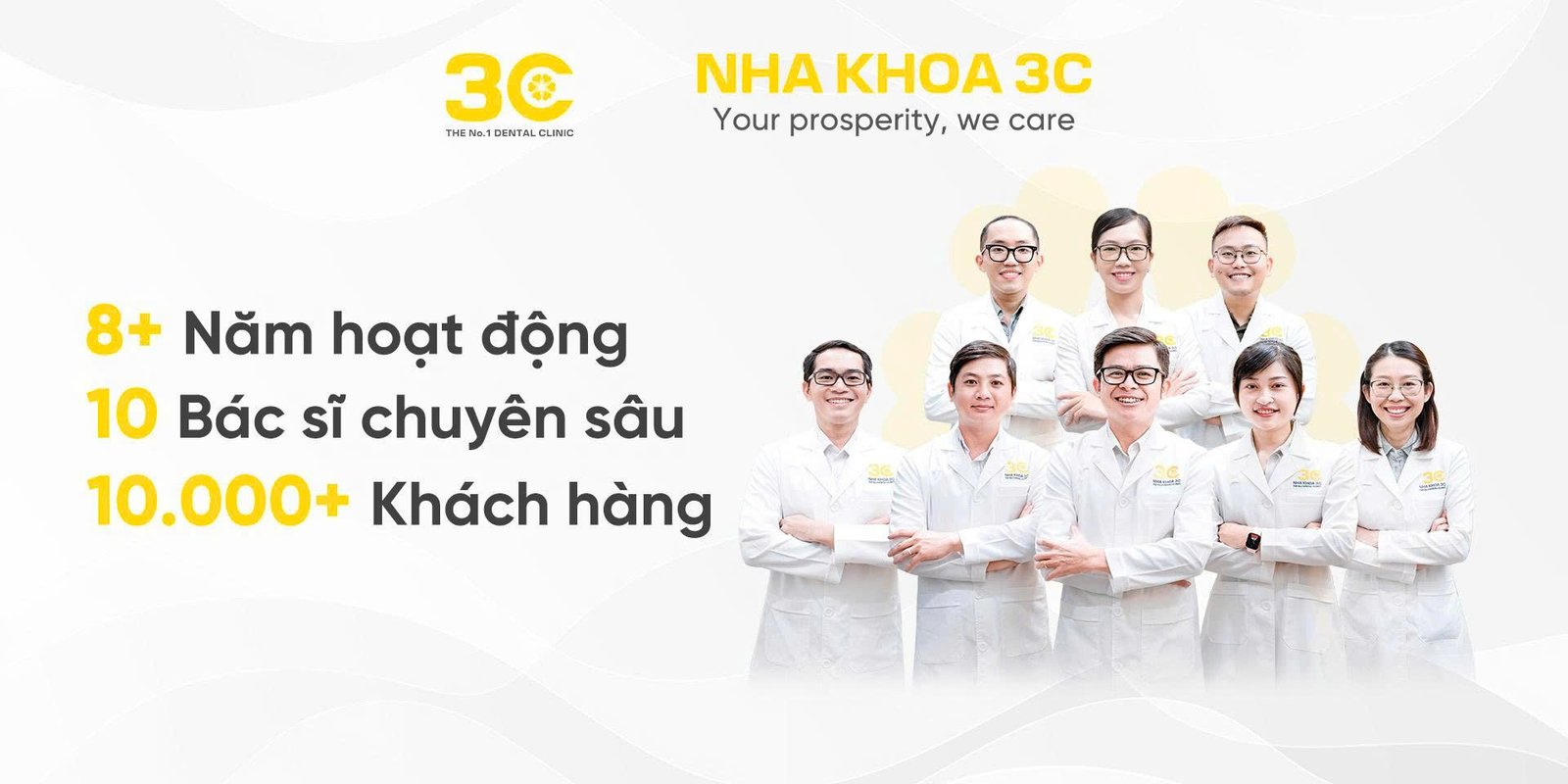
For many Vietnamese expats , the decision to return home for full arch restoration is not only about cost savings but also the desire to find a trustworthy location that meets international standards.3C Dental Clinic meets all these criteria, making it a reliable destination for many expats both domestically and internationally.
Highly Qualified, Experienced Medical Team
Nha khoa 3C brings together a team of formally trained doctors with many years of experience in the field of full arch implants, successfully performing thousands of All-on-4/All-on-6 cases, including those with severe bone loss. This is the critical factor that gives patients peace of mind when choosing treatment in Vietnam.
Modern Technology, International Standard Procedures
3C invests in a CT Cone Beam 3D imaging system, Implant analysis software, and a CAD/CAM porcelain lab. Consequently, every procedure, from diagnosis to restoration, is precise and fast. Specifically, the immediate loading implant technique at Nha khoa 3C allows patients to receive a temporary fixed prosthesis within 48 hours, highly suitable for expats with limited time during their return trip.
Reasonable Costs, Significant Savings Compared to Overseas
One of the biggest reasons expats choose 3C is the cost. While in the US, Canada, or Europe, the cost of full arch implants can be 2–3 times higher, in Vietnam, you only pay a fraction while ensuring equivalent quality, even with clearer warranty policies and more dedicated care services.
Dedicated Service, Understanding Expats’ Needs
From online consultation before returning home, assisting with appointment scheduling, to post-treatment care, the 3C team always prioritizes the patient’s comfort and convenience. It is not just a dental service; it is a close, attentive experience, helping expats feel the thoughtfulness and professionalism right in their home country.
Frequently Asked Questions (FAQ)
Before deciding on full arch restoration, many patients inevitably worry about pain, safety, or the lifespan of the dental implants. Here are the most common concerns and detailed answers from experts.
Is Full Arch Implant Surgery Painful or Dangerous?
This is a common fear for most patients when they hear about implant surgery. In reality, the entire procedure is performed under absolute sterile conditions, with the assistance of local anesthesia or sedation. As a result, patients feel almost no pain throughout the placement of the posts. After surgery, mild soreness may appear for the first few days, but it can be fully controlled with prescribed pain medication.
Regarding safety, the success rate of implant placement today exceeds 95% when performed at a reputable dental clinic. The risks of complications like infection or implant rejection are very rare and well-controlled. This demonstrates that, by choosing a quality dental facility, full arch implant restoration is a safe and reliable method.
Can Elderly People Receive Full Arch Dental Implants?
Many believe that age is a barrier to implant placement, but that is not the case. Elderly people can still undergo full arch implant restoration if their overall health is stable and their jawbone meets the necessary criteria. Before proceeding, the doctor will conduct a thorough examination with a CT Cone Beam scan to assess bone density, and simultaneously gather medical history to ensure absolute safety.
In fact, many patients over 60, and even 70 years old, have successfully undergone full arch implant restoration. Thanks to this solution, they have regained comfortable chewing ability, improved facial aesthetics, and restored confidence in daily activities. Therefore, age is no longer a barrier; the most important factor is health and making the right choice.
How Long Do Full Arch Implants Last?
One of the outstanding advantages that makes implants the “gold standard” in dental restoration is their long lifespan. On average, full arch implants can last 20 years or more, potentially a lifetime, if placed with the correct technique and cared for properly. This is something that other methods like removable dentures or dental bridges cannot compare with.
Of course, the lifespan of implants also depends on oral hygiene and the lifestyle habits of each individual. If you maintain proper hygiene, schedule regular check-ups at the dental clinic, and avoid bad habits like smoking or teeth grinding, your full arch implants can accompany you for life.
Total tooth loss is one of the most severe conditions, comprehensively affecting health, appearance, and quality of life. Choosing a full arch dental prosthesis not only helps restore chewing function and improve facial aesthetics but also brings back confidence in communication. From traditional removable dentures, Overdenture, to fixed full arch implants, each method has its own pros and cons. Among them, Implant All-on-4/All-on-6 is still considered the most optimal solution, providing long-lasting durability.
If you are looking for a reputable clinic for full arch dental prosthetics, especially for Vietnamese expats who want to combine dental treatment with a short time frame, 3C Dental Clinic is a reliable choice. With a highly qualified medical team, modern immediate loading implant technology, and reasonable costs, we are committed to providing you with strong teeth, a confident smile, and an international-standard service experience. Contact us today for a free consultation and to plan your comprehensive, safe, and effective full arch restoration.