
The jawbone serves as the foundation for teeth, maintaining facial structure and supporting chewing function. However, after tooth loss, the process of jawbone resorption can occur rapidly. Research indicates that within 6 months of tooth loss, bone density can decrease by up to 25% and continues to progress over time if not addressed promptly. So, how long does it take for jawbone resorption to occur after tooth loss, and how can it be effectively prevented?
What is Jawbone Resorption?
The jawbone plays a foundational role in the chewing system, supporting the teeth, helping them remain firmly fixed, and coordinating smoothly during eating. In addition to participating in the process of grinding food, the jawbone is crucial for maintaining facial balance, supporting clear speech, and ensuring overall aesthetics. A healthy jawbone system is the foundation for long-term oral health and quality of life.
However, when a tooth is lost, the chewing force is no longer transmitted to the alveolar bone. This lack of mechanical stimulation disrupts the bone regeneration process, leading to the phenomenon of jawbone resorption—where the bone degenerates and gradually shrinks. Dental statistics show that after one year of tooth loss, the height and volume of the jawbone can decrease by 15–25%. This resorption process not only causes facial changes but also makes subsequent tooth restoration difficult, especially when considering Dental Implant placement.
How Long Does It Take for Jawbone Resorption to Occur After Tooth Loss?
Jawbone resorption does not happen immediately after tooth loss, but the process actually begins quite early and subtly. Since there is no longer a chewing force transmitted down, the alveolar bone gradually loses the necessary stimulation to maintain density and shape. Therefore, bone resorption is an inevitable consequence if a lost tooth is not restored promptly.
Average Time for Jawbone Resorption to Start
Dental studies show that the jawbone undergoes noticeable changes just 3–6 months after tooth loss. During this phase, bone volume decreases by an average of 15–25% compared to the original. After one year, the resorption process can accelerate, causing both the height and width of the jawbone to significantly decrease. If the condition persists for many years, the jawbone can resorb by over 50%, posing major challenges for Dental Implant placement.
Factors Affecting the Rate of Bone Resorption
Not everyone experiences bone resorption at the same rate after tooth loss. This process is influenced by many factors: the location of the lost tooth, oral health status, nutrition, lifestyle habits, and even systemic diseases. For example, tooth loss in the front area often leads to faster bone resorption than in the molar area. People with periodontal disease, diabetes, or those who smoke often experience faster and more severe bone resorption. Furthermore, the level of care and chewing habits also play a significant role in maintaining or accelerating bone degeneration.
Comparing Resorption Rate in Young and Older Adults
A noteworthy point is that younger individuals often experience a faster rate of bone resorption in the initial phase after tooth loss. This is because metabolic and bone turnover processes are more vigorous in young people, leading to rapid bone changes. Conversely, in older adults, the rate of resorption may be slower, but the severity is greater in the long run because the bone quality is already diminished with age. This means that at any age, tooth loss carries the risk of jawbone resorption, differing only in speed and degree, and all cases require timely intervention.
Causes Leading to Jawbone Resorption After Tooth Loss
Jawbone resorption is a natural, yet non-uniform, process in all individuals. After tooth loss, the change in jawbone structure is influenced by many factors, from physiological conditions to daily habits. Here are the main reasons why the jawbone gradually resorbs after a tooth falls out or is extracted.
Lack of Chewing Force Impact on the Bone
Under normal conditions, every time we chew, the force from the tooth is transmitted down to the alveolar bone, stimulating bone cells to function and regenerate continuously. When the tooth is lost, this mechanism is disrupted, causing the bone to no longer be nourished and gradually degenerate. This is considered the primary and inevitable cause of jawbone resorption.
Infection and Oral Diseases
Oral diseases such as periodontitis, periapical abscesses, or infection in the extraction socket can all accelerate bone resorption. Prolonged bacteria and inflammation destroy soft and hard tissues, causing the alveolar bone to weaken and gradually shrink. In fact, many patients with severe periodontitis are at a higher risk of early tooth loss and more severe bone resorption compared to normal individuals.
Lifestyle Habits Affecting Bone Resorption
Besides pathological factors, lifestyle and daily habits also play an important role. People who smoke, drink excessive alcohol, or have a poor diet often experience faster bone loss. Smoking not only reduces blood flow to the gums but also slows down the healing and bone regeneration process. Furthermore, the misuse of poor-quality removable dentures or wearing them for many years without replacement can also increase uneven pressure on the jawbone, causing resorption to occur faster.
Signs to Recognize Jawbone Resorption
Jawbone resorption is a subtle process, usually not causing clear pain in the early stages. However, over time, individuals with missing teeth may notice many abnormal changes in their face, chewing ability, and overall oral health. Early recognition of these signs is crucial for seeking timely treatment solutions.
Changes in Facial Appearance and Aesthetics
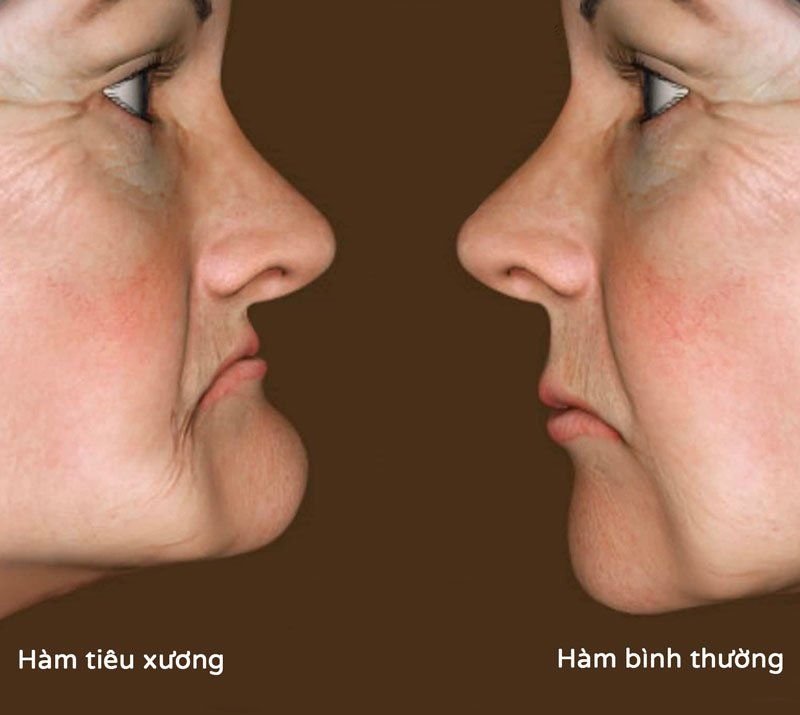
One of the most noticeable manifestations is the face starting to change after tooth loss. The cheek and lip areas tend to shrink (become sunken) because the supporting bone has resorbed, leading to the face looking older than the actual age. Especially if bone resorption occurs in the front tooth area, the smile will be clearly affected, causing the patient to lose confidence in communication.
Difficulty in Chewing
Jawbone resorption not only affects aesthetics but also hinders chewing function. As the bone resorbs, dentures or dental bridges can become loose, no longer fitting snugly against the gums. Patients will have difficulty eating hard foods, and may experience pain or an inability to bite firmly. In the long term, this condition can lead to digestive disorders because food is not thoroughly ground.

Other Symptoms to Note
Besides changes in appearance and difficulty chewing/swallowing, jawbone resorption also has other manifestations such as gum recession, the gap between remaining teeth widening, or the feeling that removable dentures are increasingly unstable. Some cases also show the gums thinning, becoming easily painful or damaged when chewing. These are all warning signs that require early examination to avoid more severe consequences.
Consequences of Prolonged Jawbone Resorption
Jawbone resorption is not merely a simple physiological change after tooth loss; it also leads to many serious consequences if the condition persists. The impact can be seen clearly in oral health, overall systemic health, and the patient’s quality of life.
Impact on Oral Health
When the jawbone resorbs, the supporting structure for the teeth becomes weak, making adjacent teeth prone to loosening and risking further tooth loss. At the same time, gum recession and gaps between teeth create conditions for plaque and bacteria to grow, increasing the risk of periodontitis, tooth decay, and other oral diseases.
Impact on Overall Systemic Health
Difficulty in chewing due to jawbone resorption leads to food not being thoroughly ground, increasing the burden on the digestive system. Patients are prone to stomach issues, poor nutrient absorption, and a decline in overall health. Furthermore, many studies indicate a link between oral diseases and systemic conditions such as cardiovascular disease, diabetes, and osteoporosis.
Reduced Quality of Life
The negative psychological and aesthetic impact cannot be ignored. A distorted face and an unnatural smile cause the patient to lose confidence in communication. Along with this, difficult eating and prolonged health decline significantly reduce the quality of life. Especially in older adults, prolonged jawbone resorption can make them feel self-conscious, limit social interaction, and directly affect mental well-being.
Method to Prevent Jawbone Resorption After Tooth Loss
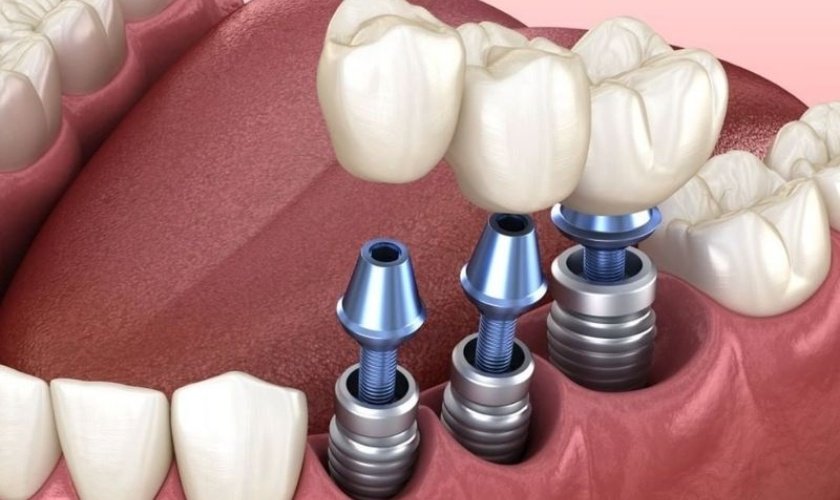
After tooth loss, if timely restoration measures are not taken, the process of jawbone resorption is almost unavoidable. Currently, dentistry offers many methods to replace missing teeth such as removable dentures, dental bridges, or Dental Implants. However, only Implant placement has the capability to effectively prevent bone resorption.
-
Removable dentures partially improve chewing function and aesthetics, but do not transmit force to the jawbone, thus failing to prevent bone resorption.
-
Fixed dental bridges are more stable, but also do not counteract bone degeneration in the missing tooth area, and even risk affecting adjacent natural teeth.
Conversely, Dental Implant placement is considered the optimal solution. An Implant is a titanium post placed directly into the jawbone, replacing the lost tooth root. Thanks to a structure and mechanism similar to a natural tooth, the Implant helps transmit chewing force down to the bone, stimulating the regeneration process and maintaining bone density. Studies show that Implants can preserve jawbone volume up to 90–95% if performed soon after tooth loss.
In addition to preventing bone resorption, Implants offer many superior benefits:
-
Restores chewing function almost like natural teeth, allowing comfortable eating.
-
Maintains facial aesthetics, limiting the sunken cheek/chin appearance due to bone resorption.
-
High durability, can be used long-term, even a lifetime with proper care.
-
Does not affect adjacent natural teeth, unlike the dental bridge method.
Due to these advantages, dental experts recommend that individuals with missing teeth choose Implants as soon as possible to both restore chewing function and effectively prevent long-term jawbone resorption.
Why Choose 3C Dental Clinic for the Prevention and Treatment of Jawbone Resorption?
The prevention and correction of jawbone resorption require not only modern technology but also a team of highly specialized doctors. At 3C Dental Clinic, customers receive comprehensive examination and consultation, from evaluating the jawbone condition and oral health to choosing the most suitable restoration method. Specifically, Dental Implant placement at Nha khoa 3C is performed according to international standard procedures, ensuring safety and providing long-lasting effectiveness.

3C Dental Clinic is proud to possess:
-
A team of highly experienced doctors in the field of Dental Implantology and aesthetic dental restoration.
-
Modern equipment such as the CT Cone Beam 3D machine, standard sterilization systems, supporting accurate diagnosis and safe surgery.
-
Genuine Implant materials, clearly certified, with high biocompatibility, aiding rapid integration with the jawbone.
-
Long-term care and warranty policies, accompanying the customer throughout the treatment process and after restoration.
With the philosophy of “Focusing on the customer’s health and smile,” Nha khoa 3C is committed to not only helping restore lost teeth but also effectively preventing jawbone resorption, bringing confidence and long-term quality of life to every customer.
Jawbone resorption is an inevitable consequence after tooth loss and can cause many serious effects on oral health, aesthetics, and quality of life. Understanding how long it takes for jawbone resorption to occur after tooth loss, its causes, signs, and prevention methods will help you actively protect your health. Among the current solutions, Dental Implant placement at 3C Dental Clinic is the optimal choice, effectively preventing bone resorption and restoring stable chewing function. Contact 3C Dental Clinic immediately for a free examination and consultation!